
Table of Contents
- Why Crochet Patterns for Small Spaces Matter
- Quick Comparison: Project Types at a Glance
- Portable Crochet Projects for On-the-Go Makers
- One Skein Crochet Patterns: Stash-Busting Made Simple
- Vertical Storage Solutions: Crochet Organization Tips
- Small Space Home Décor: Functional Beauty That Fits
- How to Crochet Comfortably in a Limited Workspace
- Choosing Your First Small-Space Project
Last Updated: August 5, 2026
Why Crochet Patterns for Small Spaces Matter
Living in a compact apartment or traveling constantly doesn't mean abandoning your creative hobbies. The challenge is finding space for yarn, hooks, and projects. Best crochet patterns for small spaces solve this by focusing on projects requiring minimal materials, fitting easily into carry-on luggage, and organizing themselves without consuming precious real estate.
BlockToGo specializes in exactly this problem. Their curated selection of travel-friendly crochet patterns and kits addresses what most crafters struggle with: maintaining a creative practice in limited space. The patterns are designed to complete quickly, use small yarn quantities, and produce items that belong in your home rather than piling up in storage.
Quick wins, finishing a project in a weekend, build momentum and confidence. Beginners intimidated by a six-month blanket project can complete coasters, bookmarks, or mug cozies and feel genuine accomplishment. For frequent travelers, portable crochet transforms dead time into productive creativity.
This guide covers 15 practical crochet patterns suited to limited spaces, along with organization strategies that maximize vertical storage and minimize clutter. Whether you're in a studio apartment, working from a small desk, or crafting while traveling, these patterns prove that size doesn't constrain creativity.
Quick Comparison: Project Types at a Glance
| Project Type | Yarn Required | Time to Complete | Best For | Space Needed |
|---|---|---|---|---|
| Bookmarks | 1 skein or less | 30-60 minutes | Portable, gifting | Minimal (fits in pocket) |
| Coasters | 1 skein or less | 15-30 minutes per set | Stash-busting, quick wins | Minimal (4x4 inch finished size) |
| Mug Cozies | 1 skein or less | 45-90 minutes | Functional gifts, travel-friendly | Minimal (wraps around mug) |
| Washcloths/Dishcloths | 1-2 skeins | 2-4 hours | Practical home items, cotton yarn | Small (8x8 to 10x10 inches) |
| Amigurumi Tiny Houses | 1 skein or less | 2-3 hours | Decorative, mantel display | Minimal (2-3 inches tall) |
| Hanging Storage Pouches | 2-3 skeins | 3-5 hours | Wall organization, vertical storage | Mounts on wall |
| Plant Hangers | 2-3 skeins | 3-4 hours | Vertical greenery display | Hangs from ceiling or hook |
| Mini Baskets | 1-2 skeins | 1-2 hours | Desk/shelf organization | Small (3-4 inches across) |
| Armchair Caddies | 2-3 skeins | 4-6 hours | Beside seating storage | Drapes over armrest |
Portable Crochet Projects for On-the-Go Makers
Portable projects share three essential qualities: they fit in a standard carry-on bag, use limited yarn, and progress visibly within a single travel session. The best ones work with a single hook size and straightforward stitches, so you can pick them up after a flight delay without needing to reference instructions constantly.
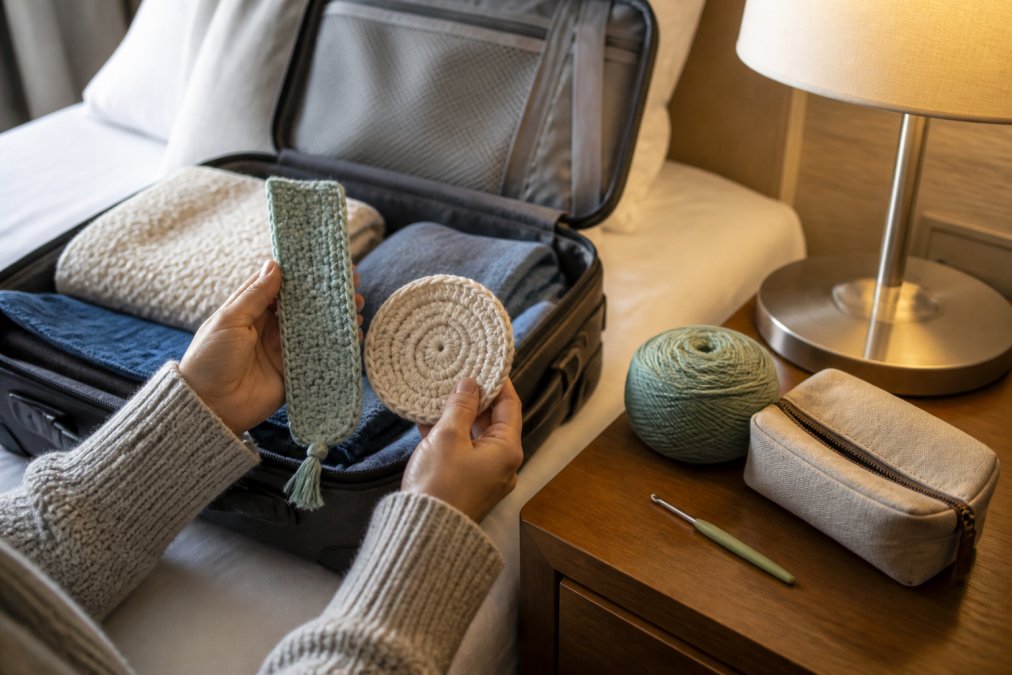
Crochet Bookmarks: Minimal Yarn, Maximum Portability
A crochet bookmark requires less than 50 yards of yarn and finishes in under an hour. The footprint is negligible: roughly 1.5 inches wide and 6-8 inches long.
Bookmarks are ideal for travel because they're simple yet customizable. You can work a basic single-color design or incorporate color changes and tapestry crochet. Pattern difficulty ranges from pure beginner to intermediate. Even beginners learn consistent tension and basic stitch formation without frustration.
Bookmarks also make thoughtful, personalized gifts costing pennies to produce. A set of three in coordinating colors uses roughly one skein and takes 2-3 hours. For travelers, having a finished bookmark means you always have a practical gift on hand.
Crochet Coasters: Quick Wins for Travel Bags
A simple four-round coaster takes 15-30 minutes. Four coasters, a practical set, consume roughly one skein and fit into a space smaller than a deck of cards when rolled.
Coasters teach fundamental skills: working in rounds, maintaining tension, and reading basic patterns. You can practice color changes or stick with a single color. Because coasters are functional, finishing a set delivers genuine satisfaction.
For travel, coasters pack flat, weigh almost nothing, and require only a single hook. Complete a set in an afternoon and you've made progress without consuming luggage space.
Mug Cozies: Functional Gifts That Fit Anywhere
A mug cozy wraps around a standard coffee mug and finishes in 45-90 minutes. One skein produces 2-3 cozies, making them efficient for stash-busting.
Mug cozies solve the "gift for someone you just met" problem. They're practical, personalized, and small enough to fit in any bag. A traveler can carry finished cozies and give them as thanks to hosts or new friends.
Pattern flexibility matters too. A basic ribbed cozy uses simple stitches and works up quickly. More advanced versions incorporate color changes or textured stitches. Because the finished item is small, experimenting with new techniques feels low-stakes.
One Skein Crochet Patterns: Stash-Busting Made Simple
One-skein projects transform leftover yarn from previous projects into finished items. These patterns typically fall into two categories: items designed to use exactly one skein (bookmarks, small dishcloths, coasters), and smaller versions of larger projects (mini blankets, abbreviated scarves, compact amigurumi). Finishing a project in a single session using yarn you already own provides immediate gratification and clears stash space.
Washcloths and Dishcloths: Practical Projects from Scraps
Washcloths and dishcloths are functional household items made from cotton yarn. A single dishcloth uses 1-2 skeins and takes 2-4 hours to complete. Once finished, it belongs in a kitchen or bathroom immediately.
Beginners appreciate dishcloths because they're forgiving. Tension inconsistencies don't matter as much as in fitted garments. You can experiment with new stitches without worrying about ruining a major project.
For small-space living, dishcloths are ideal because they're consumable. You make them, use them until they wear out, then make more. They don't accumulate in closets. A set of four in different colors adds visual interest while serving genuine purpose.
Amigurumi Tiny Houses: Decorative Items with Minimal Yarn
Amigurumi tiny houses use roughly one skein and stand 2-3 inches tall. The finished item serves as decoration for a mantel or shelf without consuming significant space.
Tiny houses appeal to crafters at various skill levels. Basic patterns involve simple shaping and basic stitches. More complex versions incorporate details like windows and doors. You can complete one in 2-3 hours.
What makes tiny houses suited to small spaces is their decorative value relative to footprint. A crocheted tiny house occupies roughly the space of a coffee mug but creates a focal point on a shelf. You can make a series of different architectural styles and arrange them as a collection without running out of display space.
Vertical Storage Solutions: Crochet Organization Tips
Small-space living requires thinking vertically. Wall-mounted storage, hanging organizers, and furniture-attached solutions multiply usable space without consuming floor area. Crochet is ideal for creating these storage solutions because you control the size, shape, and capacity.
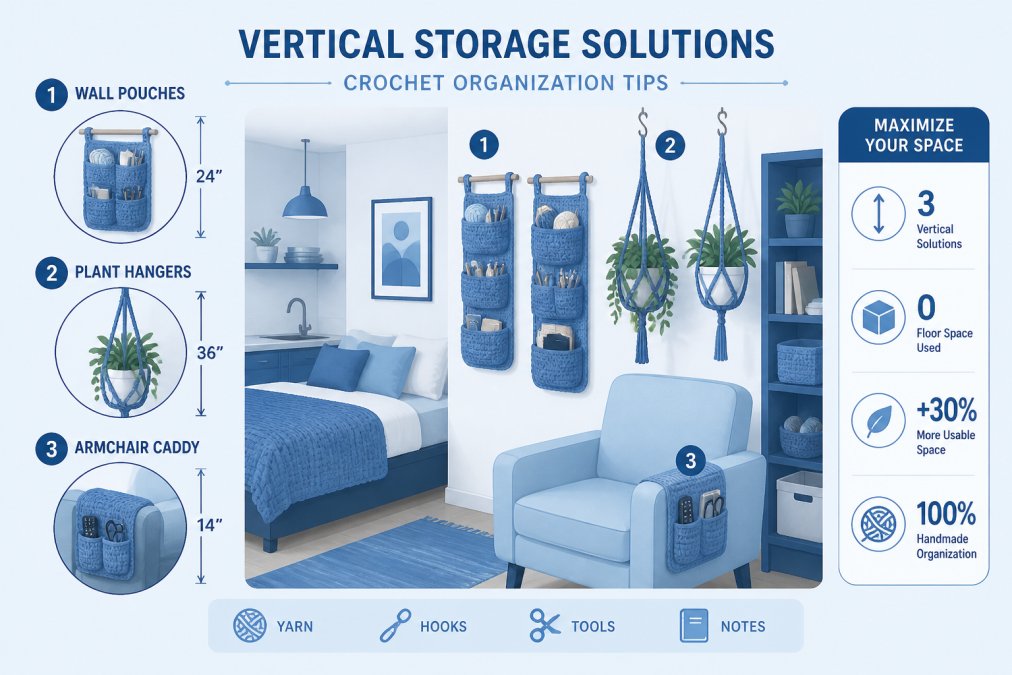
Hanging Storage Pouches: Declutter Without Floor Space
A hanging storage pouch attaches to a wall or hook and holds small items, toiletries, craft supplies, and keys without consuming any floor or shelf space. Most patterns create a pouch roughly 6-8 inches wide and 8-10 inches tall.
Hanging pouches use 2-3 skeins and take 3-5 hours to complete. The pattern usually involves crocheting a rectangle, folding it, and seaming the sides. More advanced versions incorporate multiple compartments or decorative edging.
For travelers, a hanging pouch solves hotel room organization. Hang it on the bathroom door and you've created organized storage without unpacking everything into drawers. For apartment dwellers, a series of hanging pouches on one wall transforms wasted vertical space into organized storage.
Plant Hangers in Multiple Sizes: Greenery Without Taking Up Room
Plant hangers suspend potted plants from ceiling hooks, adding greenery without consuming shelf or floor space. Crochet plant hangers come in three standard sizes: small (for 4-6 inch pots), medium (for 6-8 inch pots), and large (for 8-10 inch pots).
A small plant hanger uses 2-3 skeins and takes 2-3 hours. The pattern creates a net or macramé-style structure that cradles the pot. The advantage of crocheted hangers is their flexibility: you can adjust the pattern to fit specific pot sizes or create a series in coordinating colors.
Plant hangers address a specific small-space challenge: bringing nature indoors without sacrificing floor or shelf space. Multiple hangers at different heights create visual interest while maintaining openness.
Armchair Caddies: Keep Essentials Within Reach
An armchair caddy drapes over a chair or sofa arm and creates pockets for remotes, phones, books, and other items. Most patterns create a caddy roughly 12 inches wide with 2-4 pockets. The pattern uses 2-3 skeins and takes 4-6 hours.
Caddies are practical for small spaces because they organize essentials while eliminating the need for a side table. In a studio apartment, a caddy frees up space that would otherwise hold a nightstand. You keep your phone and remote within reach without consuming any floor area.
Small Space Home Décor: Functional Beauty That Fits
The best home décor serves a purpose beyond aesthetics. A crocheted item that's beautiful and functional, that organizes your space while looking intentional, justifies the yarn and time investment.
Mini Baskets: Desk and Shelf Organization
Mini baskets use chunky yarn to work up quickly while maintaining structural integrity. A single basket uses 1-2 skeins and takes 1-2 hours. Finished baskets measure 3-4 inches across and hold small items: coins, paper clips, hair ties, or jewelry.
The appeal of mini baskets is their visual organization. A shelf with loose items looks cluttered. The same shelf with items contained in small baskets looks intentional and organized. You can create a series in coordinating colors or mix textures for visual interest.
For desk-bound work, mini baskets eliminate the "junk drawer" problem. Instead of throwing miscellaneous items into a drawer, you sort them into labeled baskets. Supplies are visible and accessible, and the desk looks organized.
How to Crochet Comfortably in a Limited Workspace
Comfort matters when crocheting in a confined space. Poor ergonomics lead to hand fatigue and tension headaches, problems that discourage you from picking up your hook.
Start with seating. You need a chair that supports your back and allows your elbows to rest at roughly 90 degrees when your hands are in working position. If traveling, a small pillow behind your lower back prevents slouching.
Hook size and yarn weight influence comfort significantly. Larger hooks and thicker yarn require less hand tension and reduce finger fatigue. Consider using ergonomic hooks with cushioned grips if you crochet regularly.
Lighting prevents eye strain. Natural light is ideal, but a small desk lamp works if you're in a dimly lit space. Position the light so it illuminates your work without creating shadows.
Keep your yarn, hooks, and notions in a small project bag within arm's reach. A small pouch for your current project keeps everything together.
Take breaks regularly. Stretch your hands, wrists, and shoulders every 30-45 minutes to prevent cumulative strain.
Choosing Your First Small-Space Project
Selecting your first project is crucial. The ideal first small-space project finishes within a week, uses one skein or less, and produces something you genuinely want to use or gift.
For absolute beginners, start with coasters or a simple dishcloth. These teach fundamental stitches without overwhelming complexity. You'll finish quickly and feel accomplished.
If you have some crochet experience, a bookmark or mug cozy challenges you slightly more while remaining completable in a single session. You can experiment with color changes or decorative stitches.
Once you've completed a simple project, assess what worked. Did you enjoy the yarn weight? Was the hook size comfortable? Did the pattern difficulty feel right? Use these insights to choose your next project. BlockToGo's patterns are specifically designed for this progression, starting with quick wins and building toward more involved projects.
Consider your living situation. If traveling frequently, choose portable projects. If in a small apartment, prioritize storage solutions. If gifting most of what you make, focus on projects that feel special and personalized. Aligning your project choice with your circumstances ensures you'll complete projects rather than abandoning them.
Small-space crochet isn't about compromise. It's about intention. Best crochet patterns for small spaces force you to think carefully about what you make, why you make it, and where it belongs in your life. Portable items, vertical storage, and quick-finishing pieces are often the most satisfying because they deliver immediate, visible results.
BlockToGo understands this. Their curated patterns and travel-friendly kits remove the guesswork from project selection. Each pattern comes with clear instructions designed for beginners, so you're not struggling with cryptic abbreviations. You're focusing on the meditative, creative act of crochet itself. Whether you're in a studio apartment, traveling for work, or simply want to maximize your creative output in minimal space, these patterns prove that size doesn't constrain possibility.
Frequently Asked Questions
What are the best small crochet patterns for beginners who travel constantly?
Bookmarks, coasters, and mug cozies are ideal starter projects for travelers because they work up in just a few hours, require minimal yarn, and pack flat in a carry-on. These projects teach fundamental stitches without the pressure of completing something large. Choose patterns labeled beginner-friendly and focus on those using single crochet or double crochet stitches. The instant gratification of finishing a project quickly keeps you motivated, even with a busy travel schedule.
How do I organize crochet supplies in a small apartment without clutter?
Use vertical storage by hanging pouches on walls or inside closet doors to store yarn balls, hooks, and notions. Mini baskets on shelves contain smaller items like stitch markers and tapestry needles. Consider a small rolling cart that slides under furniture when not in use. Bundle yarn by weight and color, then store in labeled containers. Hanging plant hangers can hold yarn balls while keeping them visible and accessible. This approach keeps supplies within reach while freeing up floor and surface space.
Can I really make useful items from one skein of yarn?
Yes. One skein typically yields a complete dishcloth, coaster set, bookmark, or mug cozy. Scrap yarn from multiple partial skeins works perfectly for amigurumi, small baskets, or washcloths. Check the yardage on your yarn label and match it to patterns that specify yardage requirements. This approach is called stash-busting and eliminates waste while building a collection of handmade gifts or home décor items you'll actually use.
What makes BlockToGo crochet patterns different for small-space living?
BlockToGo patterns are specifically designed for makers on the move and in tight spaces. Each pattern includes clear, beginner-friendly instructions that prevent the overwhelm you might experience with dense pattern text from other sources. The designs focus on functional, portable projects that work up quickly, so you finish what you start. Customer feedback confirms the patterns are genuinely easy to follow and result in beautiful, usable items, not projects that sit abandoned in your craft bag.
How do I know a crochet pattern will actually work for my small space before I start?
Check the finished dimensions listed in the pattern. Small-space projects typically measure under 12 inches in any direction. Look for patterns labeled portable, quick-make, or stash-busting. Read reviews or customer photos to see real finished items. Choose projects that serve a purpose in your home, storage, décor, or gifts, rather than decorative-only items. Start with patterns that match your current skill level to avoid frustration and ensure completion.