
Table of Contents
- Why Beginners Love the Mental Health Benefits of Crochet
- Essential Crochet Supplies for Starters (and Easy Projects to Try)
- How Long Does It Take to Learn Crochet?
- Frequently Asked Questions
Last Updated: September 12, 2026
Why Beginners Love the Mental Health Benefits of Crochet
The benefits of crochet for beginners start with how quickly it calms a racing mind. According to USA Today's 2026 report on crafting and mental health, 89.5% of participants said crochet helped them feel calmer, 82% felt happier, and 74.7% felt more useful.
This BlockToGo guide covers why new crocheters stick with it, what supplies you need, and how long learning takes.
The Happy Hookers international crochet study found that 82.1% of crocheters name creativity as a main motivation, 78.5% name relaxation, and 75.2% name a sense of accomplishment. Notice what is missing: perfection.
Repetitive motion is the quiet engine behind it all, a meditative state one crocheter, Jen TheCrocheter, told Amber My Knotty Hobby shifted her brain away from fight-or-flight into something calmer.
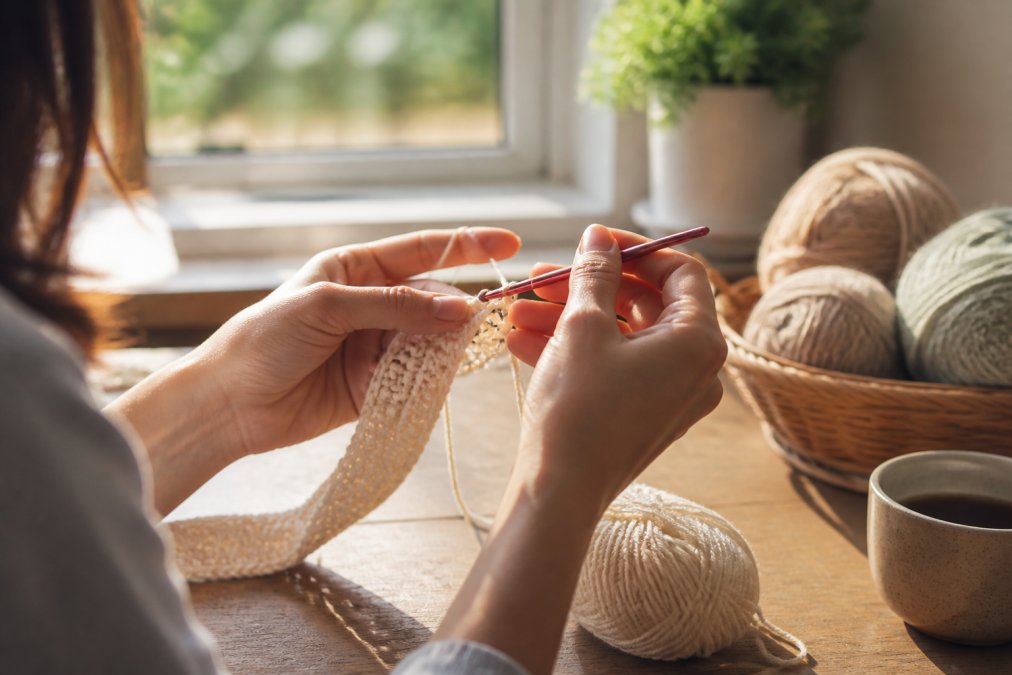
That same motion builds fine motor skills and hand-eye coordination, starting with tension control.
There is a practical side too: crochet is a digital detox that leaves you with something handmade, and researchers point to cognitive stimulation like crochet as a way to support brain health and memory as we age.
A beginner's setup is modest: one hook, one ball of yarn, and a free evening, a big reason beginners actually finish projects. The caveat: difficulty depends on your learning style and the quality of your instructions.
Essential Crochet Supplies for Starters (and Easy Projects to Try)
You need surprisingly little to begin: a 4.0 mm to 5.0 mm hook, one ball of worsted or DK weight yarn in a light color, a yarn needle, and small scissors.
Light-colored yarn is the insider choice, dark yarn hides your stitches. Easy crochet projects for beginners share three traits: they are small, use one or two stitches, and finish in an evening or two.
Beginner-friendly projects worth starting with:
- Cord wraps: tiny, useful, great for scrap yarn
- A treat pouch: practical and a lovely gift for a dog lover
- A portable game: fun to make and play
- Placemats: simple rows that dress up a table
- A wipes cover: a quick weekend upgrade for an everyday object
If you would rather skip the yarn-shop guesswork, BlockToGo kits arrive with the yarn, beads or patches, and printed instructions included. The Bone Appétit Pup Crochet Dog Treat Pouch Kit pairs cotton yarn with a ready-to-crochet leather patch, and the Beaded Farmhouse Placemat Crochet Kit includes the wooden beads and yarn for your chosen set size. Prefer to source your own yarn? Digital patterns like the Tic-Tac-Toe To-Go pattern and the Disinfectant Wipes Cover pattern give you the instructions without the materials, and there is even a free Cord Cutie Wraps pattern to test the waters at no cost.


| Project | Supplies Needed | Time to Finish | Great For |
|---|---|---|---|
| Cord Cutie Wraps | Yarn, hook, button | Under 1 hour | Scrap yarn, small gifts |
| Tic-Tac-Toe To-Go | Yarn, hook | 1-2 evenings | Kids, travel, road trips |
| Dog Treat Pouch | Kit yarn, leather patch, hook | 2-3 evenings | Pet lovers, gift giving |
Compact projects travel beautifully. A small pouch or cord wrap fits in a carry-on or work bag, so waiting rooms, flights, and lunch breaks become productive instead of restless.
How Long Does It Take to Learn Crochet?
Most beginners learn the basic chain and single crochet stitch in about an hour, and finish a simple first project within a weekend. Fluency, when you stop consulting the pattern every few stitches, usually arrives after three or four finished projects.
That timeline assumes short practice sessions, a beginner-friendly pattern in US crochet terms, and accepting that your first rows will look uneven. Everyone's do.
What slows people down is rarely the craft itself, it is unclear instructions, a hook too small for the yarn, or a project too ambitious for week one. Start small, finish something, then size up.
Pick one easy project, set aside twenty minutes tonight, and see how you feel afterward. If the calm arrives before the finished object does, you have found your new hobby.
Frequently Asked Questions
What does crocheting do to your body and mental health?
Crochet engages your hands in repetitive motion while calming your mind. The gentle movements also build fine motor skills and hand-eye coordination. For beginners, the combination of focus and relaxation makes it a soothing hobby that doubles as a creative outlet.
What is the first thing a beginner should crochet to see quick results?
Start with a small, practical project you can finish in one or two sittings. Cord wraps, simple coasters, or a tiny pouch are great choices because they use basic stitches and give you a finished item fast. BlockToGo's free Cord Cutie Wraps pattern is a perfect first project. Quick wins build confidence and keep you motivated to try bigger things.
Are there any physical disadvantages to crocheting I should know about?
Crochet is gentle, but long sessions without breaks can cause hand or wrist strain. Take a short pause every 20 to 30 minutes, stretch your fingers, and keep your shoulders relaxed. Use an ergonomic hook if you crochet often. Choosing lightweight yarn and projects that don't require tight tension also helps. With a few simple habits, most beginners crochet comfortably for years.
Learning a new craft can feel intimidating when you are not sure where to start, and unfinished projects in a bag do nothing for your confidence. BlockToGo exists to fix that, with travel-friendly patterns and kits built for real beginners: clear step-by-step instructions, practical designs you will actually use, and compact projects that fit your carry-on. Browse the BlockToGo shop to find your first pattern or kit and turn a few quiet evenings into something handmade you are proud of.