
Table of Contents
- What to Look for in a Beginner Crochet Starter Kit
- Top Beginner Crochet Starter Kits Reviewed
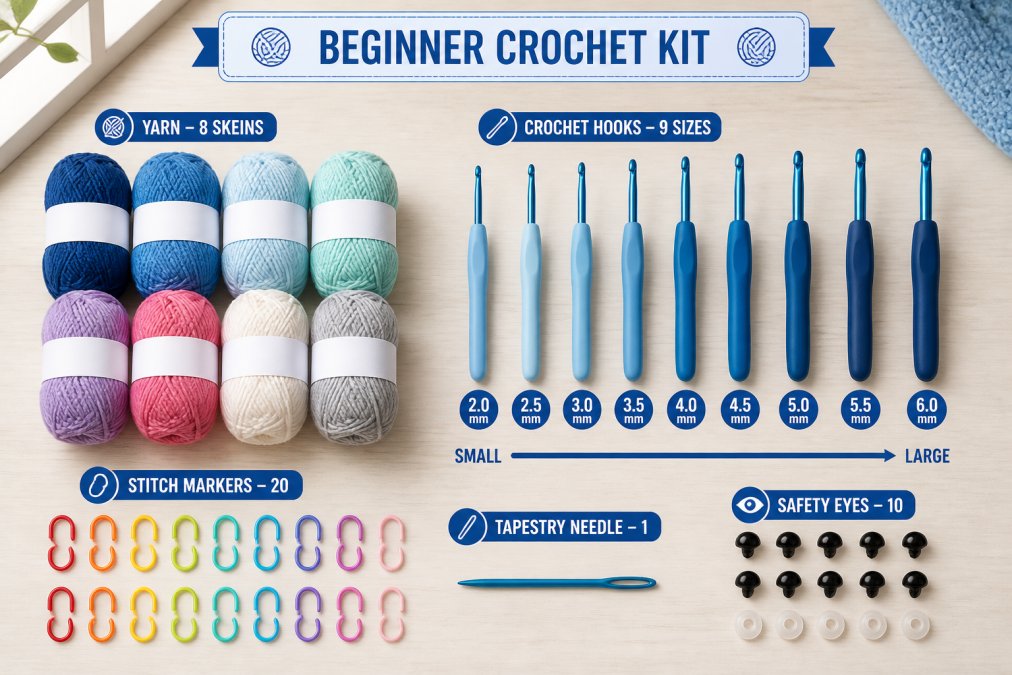
- Essential Crochet Supplies List for Every Kit
- How Long Does It Take to Learn Crochet
- Easy Crochet Patterns for Beginners
- Common Beginner Mistakes to Avoid
- Which Kit Should You Choose?
- Conclusion
Last Updated: August 7, 2026
What to Look for in a Beginner Crochet Starter Kit
A quality beginner crochet starter kit removes friction at every step. It includes forgiving yarn (acrylic or cotton blends work better than delicate fibers), appropriately sized hooks, and patterns written in plain English. The best kits also include stitch markers, a tapestry needle, and video tutorials or clear visual guidance.
Look for ergonomic handles, cheap plastic hooks with sharp edges will turn you off crochet faster than anything else. Bulky or worsted weight yarn moves faster than fingering weight, so you see progress and stay motivated. Check whether the kit includes safety eyes, stitch markers, and a storage bag. These details separate kits designed for beginners from kits that just happen to be cheap.
The real differentiator is whether the kit respects your time. Pre-started pieces or projects designed to finish in a weekend beat kits that promise you'll make a sweater by month two. You want something that builds confidence through early wins, not frustration through overpromising.
Top Beginner Crochet Starter Kits Reviewed
1. BlockToGo: Best for Travel-Friendly Patterns
BlockToGo solves a problem most beginner kits ignore: crocheting on a plane, in a hotel, or during your lunch break. The patterns are genuinely beginner-friendly, written in clear language without jargon. Each project finishes in a single sitting or across a few short sessions, and focuses on functional items like organizers and coasters rather than abstract practice pieces.
The patterns include visual step-by-step guidance, and yarn selections are carefully curated for beginners. You're not wrestling with delicate fibers or yarn that splits constantly. The designs are practical and beautiful, which keeps motivation high when starting out.
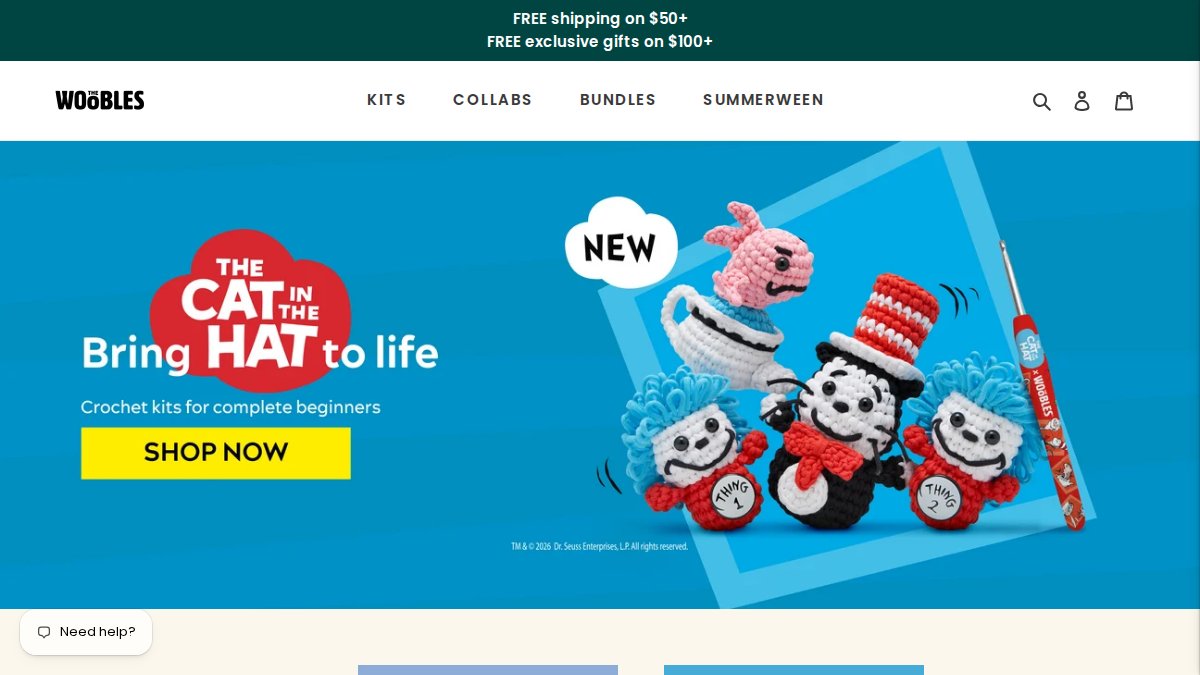
2. The Woobles: Best for Pre-Started Projects
The Woobles removes the biggest barrier for absolute beginners: they start the project for you. You don't face the intimidating blank slate of casting on. The kits include pre-started amigurumi, custom-designed forgiving yarn, and step-by-step video tutorials for every step.
Finishing your first project in a weekend builds real confidence. The yarn is soft, hooks are comfortable, and difficulty ramps gradually. By the time you finish your first amigurumi, you've learned chain stitch, single crochet, increases, decreases, and how to stuff and close a project.
The trade-off is price and scope. The Woobles kits cost more than budget alternatives and are limited to amigurumi projects. If you want to make blankets, scarves, or wearables, this isn't your path.
3. Mira Handcrafts: Best Budget-Friendly Kit
Mira Handcrafts delivers remarkable value. For the price point, you get 24 skeins of yarn in multiple colors, various hook sizes, stitch markers, tapestry needles, and a storage bag. The yarn is acrylic, which is exactly right for beginners, forgiving, affordable, and doesn't split like delicate fibers.
The color variety means you can experiment with different projects without buying additional yarn. You get enough supplies to make mistakes and keep going without feeling like you're wasting expensive materials. Video tutorials cover fundamentals, and stitch cards provide visual reference.
The limitation is that hooks are functional plastic, not ergonomic bamboo. For practice, this is fine. If you develop hand fatigue after an hour, upgrade to better hooks later.
4. Sierra Yarn: Best for Premium Quality & Support
Sierra Yarn positions itself at the premium end of the spectrum. The yarn is Cloudtouch or Peruvian cotton blends that feel luxurious in your hands. Hooks are bamboo or aluminum, not plastic.
What justifies the higher price is the support infrastructure. Each kit comes with lifetime access to private video tutorials specifically designed for that project. The patterns are written in plain language, and difficulty progression is thoughtful. Premium yarn quality matters more than beginners expect, yarn that glides smoothly and doesn't split makes the experience genuinely pleasant rather than frustrating.
The trade-off is cost and limited project selection. But if you can invest in quality, this kit teaches you properly and gives you materials you'll enjoy using.
5. DMC Mindful Making: Best for Small Projects
DMC's Mindful Making kits focus on using crochet as meditative practice. Projects are small, mandalas, coasters, simple amigurumi, designed to be completed quickly. The yarn is 100% cotton, which is crisp and holds stitch definition clearly.
You finish projects fast, which keeps motivation high. The patterns are clear, and smaller items mean less yarn waste and lower cost per project. The mindfulness angle has genuine value in a hobby designed around relaxation rather than productivity.
The limitation is scope. These kits don't teach you to make practical items like blankets or wearables, so you'll outgrow them quickly.
6. Annie's Kit Clubs: Best for Ongoing Learning
Annie's Kit Clubs operates on a subscription model, delivering a new project each month. This solves a real problem: after your first kit, what's next? Each kit includes all yarn, patterns, and tools needed. You're not just getting supplies; you're getting a guided curriculum.
The Afghan Block-of-the-Month clubs are particularly popular because they build toward a finished blanket over time. Consistency and structure remove decision-making burden, you get a new challenge each month with video support.
The trade-off is cost and commitment. Monthly subscriptions add up, and you're locked into their project selections.
Essential Crochet Supplies List for Every Kit
Beyond what comes in your kit, a few additional items support your learning.
Crochet Hooks are the foundation. Your kit should include at least one, but multiple sizes help you practice different yarn weights. Aluminum is durable and affordable; bamboo is warm and comfortable; plastic is cheap but can cause hand fatigue. Size is marked by letter or number and must match your yarn weight.
Yarn comes in different weights affecting how fast your project grows. Worsted and bulky yarn are ideal for beginners because you see progress quickly. Acrylic is forgiving for learning; cotton holds stitch definition clearly; wool is warm but can be scratchy.
Stitch Markers hold your place in a pattern and prevent losing count or skipping stitches. They're inexpensive and invaluable for organization.
Tapestry Needles are used for weaving in yarn ends and seaming pieces. They have a blunt tip that won't split yarn.
Safety Eyes are essential for amigurumi projects, giving stuffed animals personality.
| Supply | Purpose | Essential? | Notes |
|---|---|---|---|
| Crochet hooks | Create stitches | Yes | Multiple sizes helpful |
| Yarn | Material to work with | Yes | Worsted weight best for beginners |
| Stitch markers | Track stitches and rows | Yes | Inexpensive, prevents mistakes |
| Tapestry needle | Finish projects | Yes | Blunt tip prevents yarn splitting |
| Safety eyes | Amigurumi details | No | Only needed for stuffed animals |
| Yarn tension guide | Maintain stitch size | No | Practice works as well |
| Stitch counter | Track progress | No | Paper and pencil substitute fine |
How Long Does It Take to Learn Crochet
Learning basic crochet stitches takes most beginners 1-2 weeks of regular 30-60 minute daily practice. The initial learning curve is steeper than expected, but flattens quickly once core stitches become muscle memory.
Finishing your first complete project typically takes 2-4 weeks, depending on complexity and time invested. A simple coaster finishes in a weekend; an amigurumi or small blanket takes longer. Completing your first project builds confidence that carries you through harder learning phases.
Reaching competence, where you can read a pattern and execute it without constant tutorial reference, usually takes 2-3 months of consistent practice. You can troubleshoot basic mistakes, adjust tension, and understand how patterns work.
Mastering the craft takes years, but that's not the beginner goal. Most beginners just want to make something they're proud of without frustration. That's achievable in 3-4 weeks with the right kit and consistent practice.
Easy Crochet Patterns for Beginners
The best beginner patterns teach one or two new stitches while using techniques you've already learned, and finish quickly enough to maintain motivation.
Coasters and Dishcloths use only chain stitch and single crochet, finish in an hour or two, and are immediately useful. The simplicity lets you focus on tension and stitch consistency rather than complex pattern reading.
Granny Squares introduce working in rounds and combining pieces. A single square finishes in an afternoon, but squares join to make blankets, teaching how larger projects are constructed.
Amigurumi (stuffed animals) teach increases, decreases, and how to stuff and close a project. The finished piece is immediately gratifying, you've made something three-dimensional that looks real.
Simple Blankets like striped afghans teach you to work in long rows and maintain consistent tension. Mistakes are less visible, and progress is tangible as the blanket grows.
Scarves and Cowls are ideal for learning because mistakes are less visible in a long rectangle, and you finish one in a weekend.
All beginner patterns emphasize repetition and quick completion over complexity, building muscle memory through practice rather than introducing multiple new techniques simultaneously.
Common Beginner Mistakes to Avoid
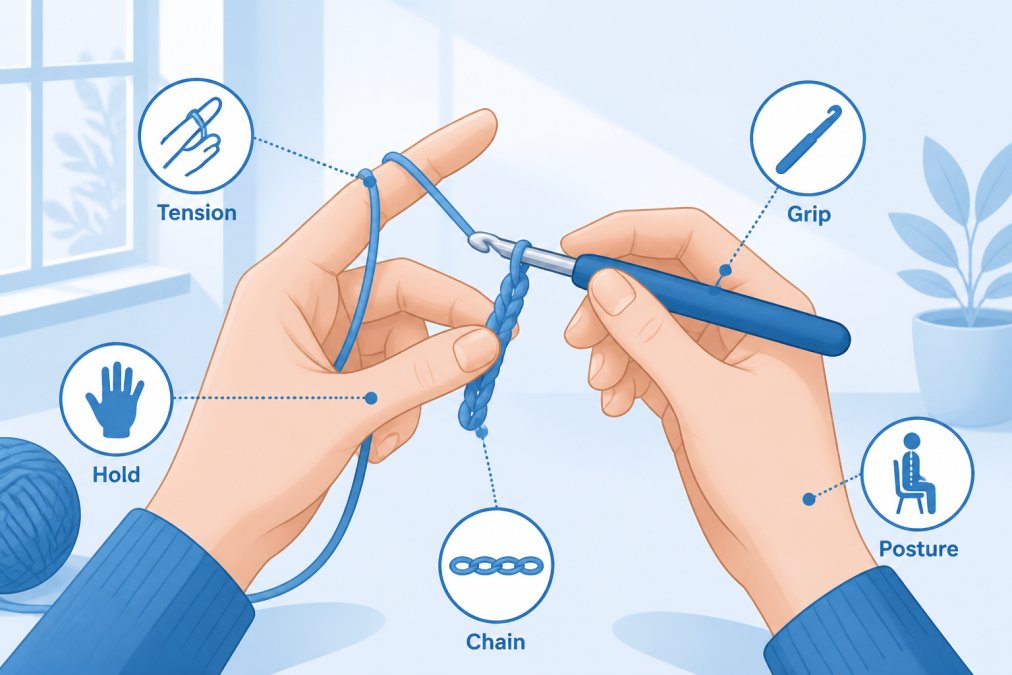
Tension inconsistency is the most common beginner mistake. Early stitches are often tight, then loosen as you relax, creating visibly uneven projects. Slow down and monitor tension actively. It becomes automatic after 50+ hours of practice.
Skipping the foundation chain. Many beginners rush this and create a twisted, uneven base. Your entire project sits on this foundation, so spend extra time here.
Losing count of stitches. Use stitch markers religiously at the beginning. One missed stitch compounds across rows, creating increasingly lopsided projects.
Working too fast. Speed comes from practice, not rushing. Slow, deliberate practice teaches better technique than racing through projects.
Not securing yarn ends properly. Weaving in yarn ends feels tedious, so beginners often skip it. This creates projects that unravel or look unfinished. The tapestry needle work is non-negotiable for professional-looking results.
Choosing yarn that's too thin. Fingering or lace weight yarn is beautiful but punishing for beginners. You can't see stitches clearly, tension errors are magnified, and progress feels slow. Worsted or bulky weight teaches fundamentals faster.
Ignoring hand fatigue. Cheap plastic hooks with sharp edges cause hand pain, making you avoid crocheting. Upgrading to bamboo or aluminum hooks makes a real difference in whether you stick with the hobby.
Comparing yourself to experienced crocheters. Instagram is full of stunning work by people who've crocheted for years. Your first project won't look like that, and that's normal. Focus on your own progression instead.
Which Kit Should You Choose?
Your choice depends on budget, travel situation, and what you want to make.
If you travel frequently: BlockToGo is the clear choice. Patterns are designed for compact, practical items, and instructions are accessible on your phone.
If you want to finish something beautiful in your first week: The Woobles removes the steepest learning curve with pre-started projects and excellent video tutorials.
If budget is your primary concern: Mira Handcrafts delivers exceptional value with enough yarn and supplies for extensive practice.
If you want premium materials and dedicated support: Sierra Yarn justifies higher cost through exceptional yarn quality and custom video tutorials.
If you want a structured learning path: Annie's Kit Clubs removes decision-making by delivering curated projects monthly.
If you prefer small, meditative projects: DMC Mindful Making emphasizes relaxation over productivity.
The best kit is the one you'll actually use consistently. Match the kit to your actual lifestyle and preferences, not to what sounds good in theory.
Conclusion
Choosing your first beginner crochet starter kit sets the tone for whether you'll stick with the hobby or abandon it after a month. The right kit removes friction at every step, includes yarn that feels good, instructions that make sense, and projects that finish quickly enough to build real confidence. BlockToGo excels by offering travel-friendly patterns with clear, beginner-focused instructions and practical designs that create functional home décor you'll actually use. The patterns are stress-free, guidance is warm and encouraging, and the emphasis on portable, achievable projects means you'll finish something beautiful without the frustration that derails most beginners. Start with BlockToGo if you want crochet that fits your real life, not a hobby that requires a dedicated craft room and hours of uninterrupted time.
Frequently Asked Questions
What should be included in the best beginner crochet starter kit?
A quality beginner crochet starter kit should include yarn (preferably acrylic or cotton), appropriately sized crochet hooks, a tapestry needle for finishing, stitch markers, clear pattern instructions, and ideally video tutorials. All-in-one kits eliminate guesswork by bundling everything you need. Look for kits that match hook size to yarn weight to prevent tension issues. Many top beginner kits now include pre-started pieces or amigurumi safety eyes to reduce initial frustration.
How long does it take to learn crochet as a complete beginner?
Most beginners master basic stitches like chain stitch, single crochet, and double crochet within 2-4 weeks of consistent practice. You can complete your first small project, such as a coaster or simple amigurumi, in 5-10 hours of work. However, developing muscle memory and tackling more complex patterns typically takes 2-3 months. The timeline accelerates significantly with step-by-step video tutorials and pre-started projects included in quality kits, which compress the learning curve considerably.
What are the easiest crochet patterns for beginners to start with?
Easy crochet patterns for beginners focus on single stitches and repetitive motions: dishcloths, scarves, blankets, and simple amigurumi (stuffed animals). Pre-started projects included in many kits give you an immediate head start. Coasters and small mandala projects are ideal for practicing tension control without long-term commitment. Patterns labeled 'Level 1' typically use only chain stitch and single crochet. Projects that build confidence fastest are those you can complete in one sitting or over a weekend, reinforcing your learning before moving to more complex techniques.
Are all-in-one beginner crochet kits worth the money?
All-in-one kits are generally worth the investment for true beginners because they eliminate the frustration of sourcing individual components and guessing yarn weights or hook sizes. Kits ensure your supplies match the pattern, reducing tension and sizing mistakes. While you could buy supplies separately, kits often bundle quality yarn, ergonomic hooks, and video tutorials at a comparable or lower total cost. The real value lies in the learning support and stress-free experience, especially for travelers or those with limited time who need quick-win projects.
Do beginner crochet kits include video tutorials?
Most quality beginner crochet starter kits now include access to video tutorials, though availability varies by brand. The Woobles and Sierra Yarn offer step-by-step video guides for each project. Lion Brand and Crochet Made Easy provide stitch tutorials on their websites. Annie's Kit Clubs includes video support with every subscription. Video tutorials are invaluable for beginners because they show proper hand positioning, tension control, and how to fix common mistakes in real time, something written patterns alone cannot convey.