
Table of Contents
- Why Travel Crochet Patterns Matter in 2026
- Small Crochet Projects for Beginners
- One-Skein Wonders: Stash-Busting Projects
- How to Pack Crochet Hooks for Air Travel
- Portable Crochet Lamp Versus Headlamp for Crafting
- Organizing Your Travel Crochet Kit
- Granny Squares and Motif-Based Travel Projects
- Conclusion
Last Updated: August 18, 2026
Why Travel Crochet Patterns Matter in 2026
Crochet has transformed into a legitimate creative movement, with over 65 million people globally engaged in knitting and crochet in 2024, a 12% jump from 2020. This surge reflects a deliberate shift toward analog lifestyles and screen-free downtime, especially among Millennials and Gen Xers seeking in-person crafting communities.
For frequent travelers, the best travel crochet patterns solve a real problem: staying creatively engaged during flights and layovers without hauling excess supplies. The U.S. crochet market is valued at approximately USD 620 million in 2026 and projected to exceed USD 960 million by 2033, reflecting growing demand for portable, beginner-friendly projects that produce functional, giftable items.
BlockToGo specializes in travel-friendly crochet patterns and DIY kits designed for people on the move. This guide covers the best travel crochet patterns that fit into carry-on luggage, require minimal setup, and deliver finished projects you'll actually use.
Small Crochet Projects for Beginners
Small projects are the foundation of portable crochet. They finish fast, use minimal yarn, and deliver immediate satisfaction, critical when working in confined spaces like airplane seats.
Coasters and Washcloths
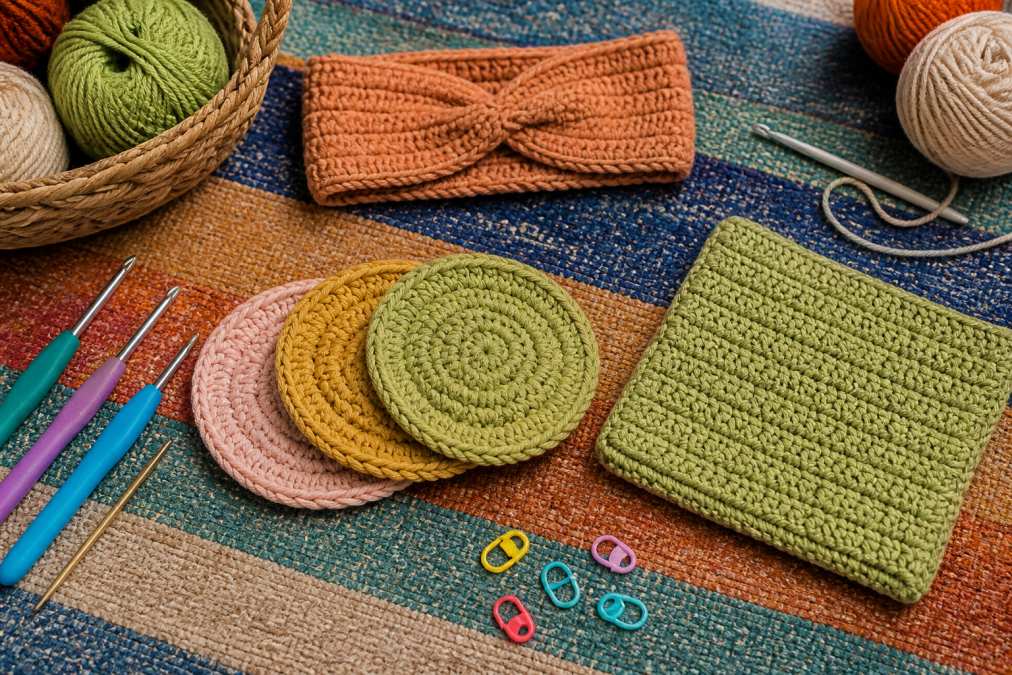
Coasters are the gateway travel crochet project. They work up in under an hour, require only a small amount of yarn, and produce something genuinely useful. A basic coaster uses a simple granny square or single-crochet pattern, ideal for beginners practicing tension and stitch consistency.
Washcloths operate on the same principle but slightly larger. Cotton yarn provides absorbency and durability, and you can complete one in a single afternoon. What makes these patterns travel-friendly is their forgiving nature, if you drop a stitch, restarting costs only 30 minutes, not hours of rework.
Bookmarks and Keychain Holders
Bookmarks occupy a sweet spot for travel crochet. They're narrow enough to work on in tight spaces and require only basic stitches. A simple bookmark uses single crochet or half-double crochet in a single color, finished with a tassel or loop, the entire project takes 20-30 minutes.
Keychain chapstick holders are even more compact, holding a standard chapstick tube with minimal yarn (often less than 10 yards). Both patterns require only basic notions: a tapestry needle and optionally a small keychain ring. They pack flat and take up almost no luggage space.
Headbands and Mug Cozies
Headbands are quick wins that produce wearable items in 25-40 minutes using worsted-weight yarn. The pattern is straightforward: a long rectangle that stretches to fit your head, often with a button closure or elastic.
Mug cozies serve a similar purpose: quick, practical, and useful. They wrap around a standard coffee mug using approximately 30-50 yards of yarn and take 45 minutes to an hour to complete. Both projects benefit from beginner-friendly stitch patterns and consistent tension.
One-Skein Wonders: Stash-Busting Projects
One-skein projects are the secret weapon for travel crochet. A single skein of yarn (typically 50-220 yards depending on weight) produces a complete, finished item, eliminating the need to carry multiple skeins.
Amigurumi and Small Stuffed Creatures
Amigurumi, the Japanese art of crocheting small stuffed animals, is perfect for travel. A single skein produces a complete creature: a small cat, octopus, or egg-shaped figure. Most small amigurumi patterns take 2-4 hours and use basic stitches: single crochet and increases/decreases.
What you'll need: yarn, a crochet hook (typically size B-E), a tapestry needle, and fiberfill stuffing. The stuffing weighs almost nothing. Safety eyes are optional but add personality. The challenge isn't complexity, it's maintaining consistent, tight stitching so the stuffed animal holds its shape.
Crochet Tic-Tac-Toe Game
A crochet Tic-Tac-Toe game consists of a board (typically a 3x3 grid of granny squares) and nine playing pieces in contrasting colors. BlockToGo offers this as both a pattern and a kit, making it accessible for beginners while teaching granny squares, a fundamental motif used in countless projects.
The appeal for travelers is dual-purpose: it's a project to work on during downtime, and once finished, it becomes a portable game you can play with travel companions. Granny squares typically take 15-20 minutes each. A full Tic-Tac-Toe game takes roughly 4-6 hours spread across multiple days, making it ideal for a week-long trip.
How to Pack Crochet Hooks for Air Travel
TSA rules permit knitting needles and crochet hooks on domestic flights within the United States, but rules are less clear internationally and vary by airline. The safest approach for domestic travel is to pack hooks in your carry-on. TSA agents understand crochet hooks better than checked baggage screeners.
Hooks made of bamboo or plastic are less likely to trigger concern than metal hooks, though metal is technically permitted. For international travel, check your destination country's customs rules and your airline's specific policy before you depart. A 10-minute phone call to your airline's customer service line saves the frustration of confiscation.
Pack hooks in a dedicated small pouch, grouped by size. This makes them easy to show TSA if asked. Stitch markers can be problematic, small safety pins work as stitch markers and are permitted. Avoid markers with sharp points.
Small scissors (under 4 inches) are permitted in carry-on luggage on domestic flights. For international flights, pack scissors in checked luggage only. A better solution: bring a small yarn cutter or simply break yarn with your fingers.
Portable Crochet Lamp Versus Headlamp for Crafting
Lighting is non-negotiable for travel crochet, especially on evening flights or in dim hotel rooms. A portable crochet lamp is a small, battery-powered LED light designed specifically for crafting. The advantage is focused, bright light without wearing anything. The disadvantage is added weight and bulk.
A headlamp (a light mounted on a headband) frees your hands entirely and works in any position. For air travel specifically, a headlamp wins. You can crochet in a cramped airplane seat without needing a tray table. A headlamp weighs ounces and packs into a carry-on pocket.
LED headlamps designed for hiking work perfectly for crochet. Look for one with adjustable brightness and a red-light mode (which preserves night vision and doesn't disturb sleeping travel companions). Expect to pay $20-40 for a quality headlamp.
Organizing Your Travel Crochet Kit
Space is your constraint when traveling. A well-organized kit fits into a small project bag, taking up minimal luggage space while keeping everything accessible.
Start with a small project bag roughly the size of a paperback book. Look for bags with internal pockets to separate yarn, hooks, and notions. Pre-wind yarn into smaller balls using a yarn ball winder to save space and prevent tangling.
Organize hooks by size in a small case. Include only the hook sizes you'll actually use for your planned projects, typically 2-4 hooks maximum. Notions should be minimal: a tapestry needle (essential for weaving in ends), 2-3 stitch markers, small scissors or a yarn cutter, and a tiny notepad for tracking row counts.
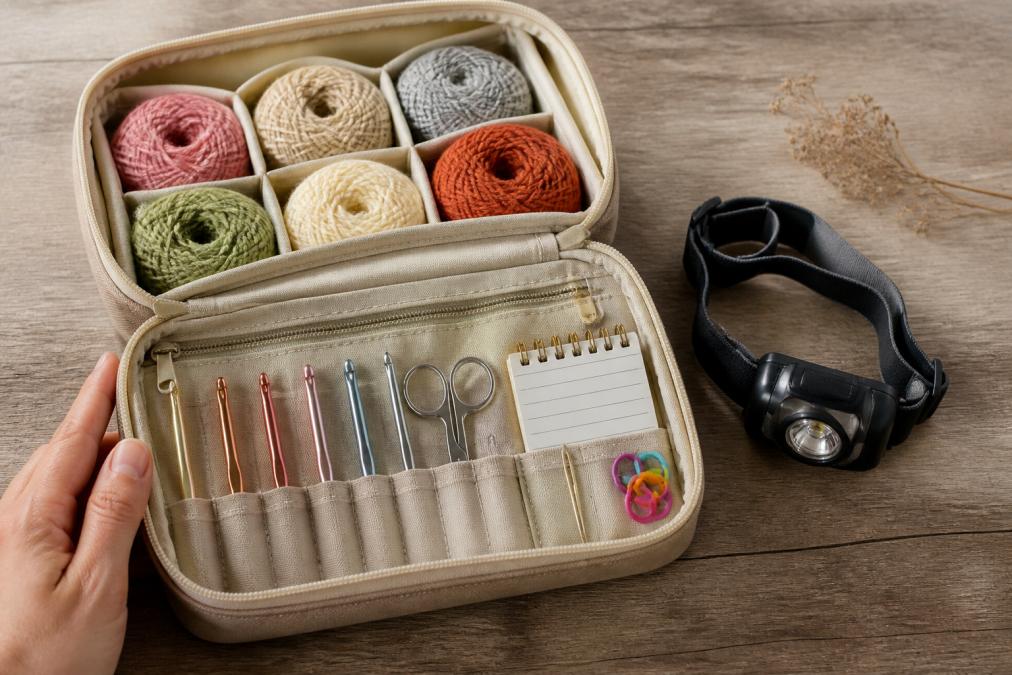
A complete, well-organized travel crochet kit should weigh under 2 pounds. If it's heavier, you've brought too much.
Granny Squares and Motif-Based Travel Projects
Granny squares are the building blocks of portable crochet. A single granny square takes 15-20 minutes, requires minimal yarn, and can be combined with other squares to create larger projects like blankets, scarves, or bags.
The beauty of motif-based projects is modularity. You can work on one square per day during your trip, then sew them together when you return home. This approach solves the travel constraint: you're not committed to finishing a large project before you leave, and each daily session produces a complete, finished unit.
A granny square uses basic stitches: chains, single crochet, and double crochet. The pattern is forgiving, slight variations in tension don't ruin the overall look because the open, lacy structure accommodates small inconsistencies. For travel, stick with single-color or two-color granny squares.
Once you've completed 9 squares (roughly 3-4 hours of work), you can sew them into a small blanket, market bag, or pillow cover. BlockToGo's crochet kits often include pre-selected yarn and patterns for motif-based projects, eliminating decision-making about which colors and yarn weights work together.
| Project Type | Time per Unit | Yarn per Unit | Best For | Finished Size |
|---|---|---|---|---|
| Granny Square | 15-20 min | 20-30 yards | Building larger projects | 4-6 inches |
| Coaster | 20-30 min | 15-25 yards | Quick gifts, practice | 4x4 inches |
| Bookmark | 20-30 min | 10-20 yards | Reading companions | 2x6 inches |
| Amigurumi | 2-4 hours | 40-80 yards | Collectible finished items | 2-4 inches |
| Headband | 25-40 min | 50-100 yards | Wearable accessories | One size fits most |
The best travel crochet patterns respect your constraints: limited luggage space, unpredictable work environments, and the need for projects that actually finish.
Travel crochet is a significant driver of the crochet market's 6.2% annual growth. People are bringing their projects everywhere, transforming downtime into productive, meditative creative work.
BlockToGo makes this easier by offering beginner-friendly patterns and kits designed specifically for portability. Start with one small project, a coaster or bookmark, and you'll quickly develop the confidence to tackle larger motif-based projects like granny square blankets.
Pack light, choose patterns with clear endpoints, and bring a headlamp. Your next trip becomes an opportunity to create something beautiful and functional, one stitch at a time.
Frequently Asked Questions
What are the best small crochet projects for travel?
Coasters, bookmarks, headbands, and mug cozies are ideal travel crochet patterns because they work up quickly, use minimal yarn, and fit easily in a carry-on. One-skein projects like amigurumi and keychain holders are stash-busting options that keep you engaged during flights or hotel stays. Crochet Tic-Tac-Toe games offer both a fun project and entertainment once complete. These beginner-friendly designs deliver finished items you can actually use or gift, solving the common concern about unfinished projects.
How do you organize crochet supplies for travel?
Use a compact project bag with compartments for yarn, hooks, and notions. Store yarn in small ziplock bags or a yarn ball winder to prevent tangling. Keep stitch markers, tapestry needles, and scissors in a separate pouch. Label each section so you can quickly find what you need. Limit yourself to one or two projects per trip to reduce bulk. Consider packing only what you'll realistically complete, which also helps with the worry of unfinished projects sitting in your luggage.
Are crochet hooks allowed on airplanes according to TSA rules?
The TSA generally allows crochet hooks on flights within the United States, as they pose no security risk. However, screening can be subjective, and individual agents may question them. To avoid delays, pack hooks in your carry-on where they're easily accessible for inspection, not buried in checked luggage. Keep small scissors in checked baggage only, as they exceed carry-on size limits. If traveling internationally, check the specific airline and destination country's rules beforehand, as regulations vary.
What's the difference between a portable crochet lamp and a headlamp for travel crafting?
A portable crochet lamp provides hands-free, adjustable lighting that sits on a table or attaches to your project bag, ideal for hotel rooms or outdoor spaces. A headlamp frees both hands completely and works well in any position, making it perfect for airplane seats or cramped spaces. Headlamps are lighter and more compact for travel, while lamps offer better visibility for detailed stitches. Choose based on your travel environment: headlamp for planes and tight spaces, lamp for hotel work areas where you can set it down.