
Table of Contents
- What Makes the Best Travel Crochet Projects for Beginners
- Travel Crochet Kit Essentials You Actually Need
- TSA Crochet Hook Rules: What You Can Bring on a Plane
- 10 Small Crochet Projects for Beginners That Travel Well
- Plane Rides vs. Road Trips: Matching Best Travel Crochet Projects for Beginners to Your Journey
- Project Save Kits and Digital Pattern Management
- Conclusion
Last Updated: August 3, 2026
Picking the best travel crochet projects for beginners sounds simple until you're stuck on a five-hour flight with a tangled skein, a pattern you can't read in dim cabin light, and a hook that just slipped between the seats. At BlockToGo, we've built our entire pattern library around solving exactly that problem: projects compact enough for a carry-on, forgiving enough to survive interruptions, and satisfying enough that you'll actually finish them.
The best travel crochet projects for beginners share three traits: they use a single, contained skein of yarn; they rely on a short, repeating stitch pattern you can memorize; and they produce a useful finished item.
What Makes the Best Travel Crochet Projects for Beginners
Travel-friendly crochet projects are defined by three qualities: portability, a low stitch count, and a forgiving construction that doesn't unravel with a single dropped stitch.
Criteria: Portable, Low-Stitch-Count, and Forgiving
Portable means the entire project, yarn included, fits inside a gallon-sized zip-lock bag or a small project pouch. Low stitch count means you're working with a simple, repetitive stitch repeat you can execute on autopilot during a bumpy ride. Forgiving means if you lose count at row 12, you can frog back two rows without destroying the whole piece. Aim for patterns where the first two rows teach you the entire repeat. The best travel projects also produce functional items: dishcloths, washcloths, coasters, market bags.
Best Yarn Weights for Travel Crochet
Fingering weight and DK weight yarn are the best options for travel crochet projects. Fingering weight gives you the most yardage per ounce, a 400-yard skein takes up roughly the same space as a tennis ball. Avoid bulky yarns for travel; they eat up bag space fast. Cotton yarn is the best fiber choice for beginners traveling in warm climates. It holds its shape well, doesn't pill with friction inside a bag, and most cotton yarns are machine washable.
Travel Crochet Kit Essentials You Actually Need
A travel crochet kit should contain only what you genuinely need for the specific project in your bag.
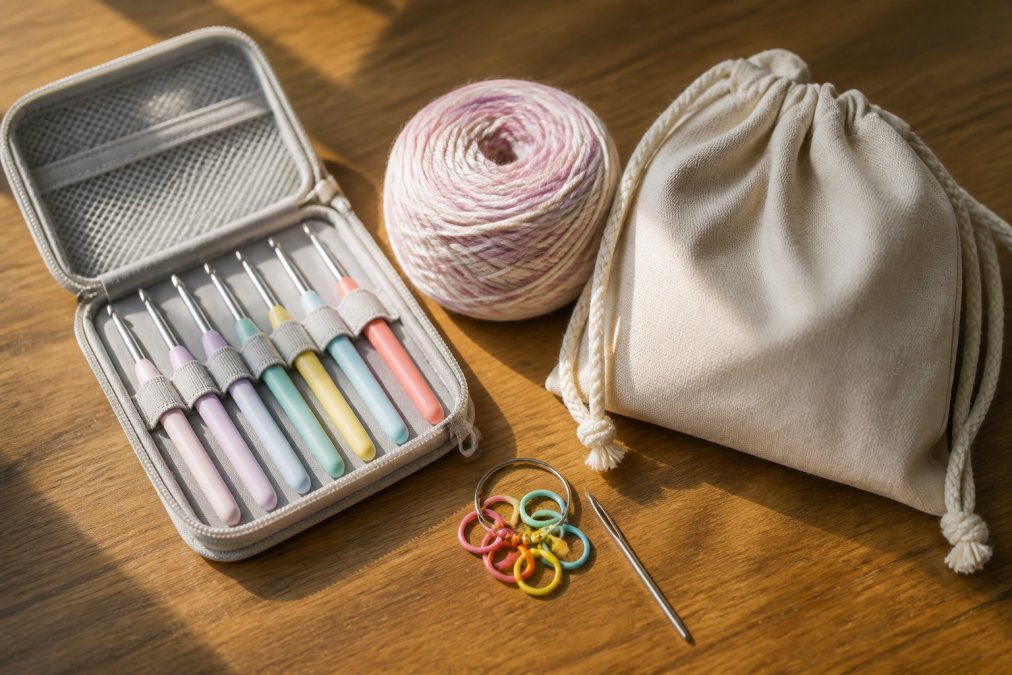
Hook Case, Stitch Markers, and Tapestry Needle
A slim hook case that holds six to eight hooks is all you need. Stitch markers are non-negotiable, losing your place mid-row is the number one reason beginners abandon projects on the road. A small stitch marker organizer box with multiple compartments keeps your markers, a tapestry needle, and scissors in one contained unit.
Yarn Storage and Tangle Prevention on the Road
Tangle prevention starts before you leave home. Wind your yarn into a center-pull cake and place it inside a zip-lock bag with a small hole punched in the corner. The yarn feeds cleanly through the hole, the bag keeps the cake from picking up lint, and nothing rolls under the seat.
TSA Crochet Hook Rules: What You Can Bring on a Plane
According to TSA's official guidelines on knitting and crochet needles, crochet hooks are permitted in both carry-on and checked bags. Metal, plastic, bamboo, and ergonomic hooks all pass through security without issue.
Scissors with blades under four inches are generally permitted in carry-on bags. Nail clippers work as a substitute for cutting yarn and raise zero security concerns. If you're flying internationally, check the security guidelines for your departure country before packing metal tools.
Ergonomics in Cramped Spaces: Hooks and Posture Tips
Ergonomic hooks are not a luxury for travel crochet; they're a necessity. Airplane seats force your body into positions that amplify wrist and hand strain. A standard aluminum hook with no grip transfers that strain directly into your fingers over a two-hour session. Keep your elbows close to your body, work on your lap rather than holding the project up in front of you, and take a two-minute break every 30 minutes to stretch your fingers and wrists.
10 Small Crochet Projects for Beginners That Travel Well
The ten projects below represent the best travel crochet projects for beginners, selected specifically for portability, simplicity, and usefulness.
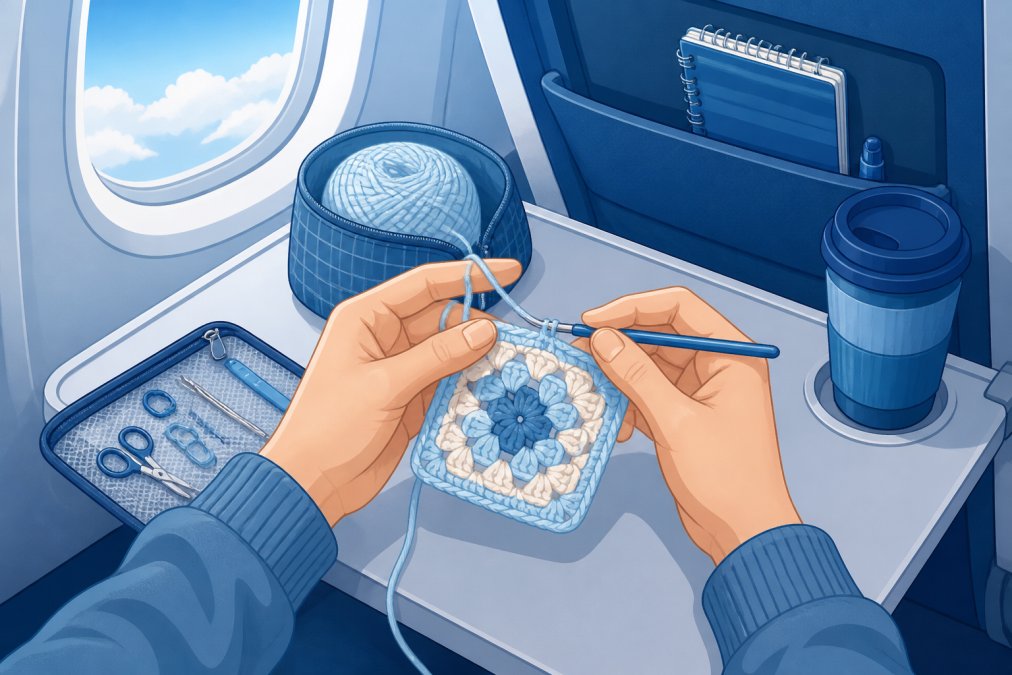
1. Granny Squares
Granny squares are the single best travel crochet project for beginners. Each square is self-contained, takes 15-30 minutes to complete, and uses only double crochet stitches and chain stitches. A standard four-round granny square uses roughly 15 yards of yarn, meaning a single 200-yard skein produces 13 squares.
2. Washcloths
A washcloth is the most practical beginner project that exists. A standard 7-inch square uses approximately 50-60 yards of cotton yarn and requires only single crochet or half double crochet stitches. The stitch repeat is identical every row, so you can work in near-darkness without losing your place.
3. Market Bags
A crocheted market bag uses a simple mesh stitch pattern and requires only one skein of cotton yarn. The pattern repeats every two stitches, making it easy to memorize after the first round.
4. Mug Cozies
Mug cozies are small, fast, and infinitely giftable. A standard cozy works up in under an hour using worsted weight yarn and a 5mm hook. Total yarn used: roughly 30-40 yards.
5. Simple Headbands
A beginner-friendly headband uses a single 50-yard skein of DK or worsted weight yarn and a 5mm hook. Chain 10, work in half double crochet for approximately 18 inches, seam the ends together.
6. Mini Pouches and Zipper Cases
A small crocheted pouch worked in the round makes a functional project bag for your stitch markers, a lip balm, or earbuds. Work a flat oval base using single crochet increases, then work straight sides for 20 rounds. Yarn required: 80-100 yards of DK weight.
7. Coasters
Four coasters from a single skein of cotton yarn. Each coaster takes 20-30 minutes and uses only single crochet worked in the round.
8. Plant Hangers
A simple three-strand plant hanger uses approximately 100 yards of cotton twine or DK cotton yarn. Cut six strands, fold in half, and work a series of chain loops at regular intervals.
9. One-Skein Scarves
A one-skein scarf in fingering weight yarn is the classic travel crochet project. A 400-yard fingering weight skein produces a scarf approximately 60 inches long. Chain 20, work in half double crochet back and forth until the skein is nearly exhausted.
10. Dishcloths
Dishcloths use a slightly thicker cotton yarn and a larger hook than washcloths, producing a more textured fabric. Chain 26, work in double crochet for 24 rows. Total yarn: 60-80 yards.
| Project | Yarn Required | Approximate Time | Best For |
|---|---|---|---|
| Granny Squares | 15 yards per square | 15-30 min per square | Short layovers, modular projects |
| Washcloths | 50-60 yards | 60-90 min | First projects, gift sets |
| Market Bags | 200 yards cotton | 3-4 hours | Road trips, longer flights |
| Mug Cozies | 30-40 yards worsted | 45-60 min | Quick gifts, short flights |
| Simple Headbands | 50 yards DK | 60-120 min | One-session projects |
| Mini Pouches | 80-100 yards DK | 90-120 min | Learning to work in the round |
| Coasters | 25-30 yards per coaster | 20-30 min each | Gauge practice, gift sets |
| Plant Hangers | 100 yards cotton | 60-90 min | Meditative, low-attention projects |
| One-Skein Scarves | 400 yards fingering | 3-5 hours | Long flights, winter travel |
| Dishcloths | 60-80 yards cotton | 60-90 min | Housewarming gifts |
Plane Rides vs. Road Trips: Matching Best Travel Crochet Projects for Beginners to Your Journey
The project that works perfectly on a road trip can be completely wrong for a plane.
Plane rides impose hard constraints: limited space, no ability to spread out, and frequent interruptions. The best travel crochet projects for beginners on a plane are small, self-contained, and require no accessories beyond a single hook and a stitch marker. Granny squares, coasters, and mug cozies are the top three choices.
Road trips offer a fundamentally different crafting environment. You have a seat that doesn't change, a bag you can access freely, and no security restrictions on your tools. This is where you can work on market bags, plant hangers, and one-skein scarves.
Never start a new project in transit. Always begin your project at home, complete the first few rows, and confirm your tension control is correct before you travel.
Project Save Kits and Digital Pattern Management
A project save kit and a solid digital pattern strategy are what separate crocheters who finish projects from those who come home with a bag of good intentions.
Building a Project Save Kit for Mid-Trip Emergencies
A project save kit is a small collection of supplies designed to rescue a work-in-progress when something goes wrong on the road. Pack these items in a small zip-lock bag inside your main project bag:
- One backup hook in the same size as your primary hook
- Five locking stitch markers
- A 12-inch length of contrasting scrap yarn for emergency stitch holders
- A tapestry needle
- A small thread cutter or nail clippers
A dropped stitch caught immediately with a marker takes two minutes to fix. A dropped stitch discovered three rows later takes 20 minutes to frog and re-work.
Keeping Patterns Accessible Offline
Relying on a browser tab or a Ravelry link means you're one dead battery or lost Wi-Fi connection away from being stuck. Save your pattern as a PDF to your phone's local storage before you leave. Apps like Apple Books and Google Play Books store PDFs offline permanently. For patterns you've purchased from platforms like BlockToGo's Etsy shop, download the PDF immediately after purchase and save it to at least two locations: your phone's local storage and a cloud service that supports offline access.
Finding the right starting point is the biggest barrier for beginner crocheters who want to craft on the go. BlockToGo addresses this directly with a curated selection of travel-friendly crochet patterns designed specifically for makers who need clear, easy-to-follow instructions and practical, functional results. Get started with BlockToGo and bring a project you'll actually finish on your next trip.
Frequently Asked Questions
What are the best crochet projects to take on a plane?
The best travel crochet projects for beginners on a plane are small, one-skein items with a simple stitch repeat you can memorize quickly. Granny squares, washcloths, coasters, and mug cozies all fit in a carry-on project bag, require only a single hook, and are easy to set down mid-row without losing your place. Fingering weight or worsted weight yarn in a yarn cake format feeds smoothly without rolling off the tray table.
Is it allowed to bring crochet hooks on a plane in the US?
Yes. The TSA does not prohibit crochet hooks in carry-on or checked bags. The TSA's official guidance notes that knitting needles and crochet hooks are generally permitted, though individual officers have discretion. To avoid any friction at the checkpoint, store hooks in a dedicated hook case, pack a self-addressed envelope to mail anything questioned, and choose bamboo or plastic hooks if you want to minimize scrutiny. Metal hooks are fine but draw more attention during X-ray screening.
How do you pack crochet supplies for travel without yarn tangling?
Start with a yarn cake or pre-wound center-pull ball instead of a loose skein. Place it inside a small project bag or a portable yarn ball holder so it can't roll away. Keep hooks, stitch markers, and a tapestry needle in a zippered hook case. For road trips, a dedicated yarn storage tote with multiple compartments keeps everything organized. Packing one project per bag prevents colors from mixing and makes it easy to grab exactly what you need.
What are some small crochet projects for beginners that don't require much yarn?
Coasters, washcloths, mug cozies, and granny squares are all excellent small crochet projects for beginners because each one typically uses less than one skein. A standard dishcloth uses roughly 100 yards of worsted weight cotton. Mini pouches and headbands use even less. These projects are ideal for using up leftover yarn, keeping your project bag lightweight, and finishing something satisfying within a single flight or car ride.
Can I crochet in the car without getting motion sickness?
Many crafters find that looking down at fine detail work while the car is moving triggers nausea. The best workaround is choosing a project with a memorized stitch repeat so you can work mostly by feel and look up frequently. Bulkier yarn and larger hooks reduce the need to focus closely on your work. Sitting in the front passenger seat, keeping the window cracked, and taking short breaks every 20 to 30 minutes also helps manage travel fatigue during longer road trips.