
Table of Contents
- What Makes Crochet Patterns Look Professional
- How to Block Crochet Projects for a Finished Look
- Crochet Tension Tips for Beginners
- Finishing Techniques for Crochet Gifts That Impress
Last Updated: August 23, 2026
Making crochet patterns that look professional doesn't require advanced skills or expensive materials. The difference between "homemade" and "professionally finished" lies in blocking, tension control, and careful finishing work.
According to Craft Yarn Council research, 93% of knitters and crocheters report that the crafts gave them a feeling of accomplishment. When your work looks intentional and refined, you're more likely to finish projects and share them as gifts.
What Makes Crochet Patterns Look Professional
Professional crochet shares three qualities: clear stitch definition, balanced proportions, and intentional finishing. You can see exactly what stitch was used in each row, the finished piece holds its intended shape without puckering, and every edge is neat and secure.
The good news? These qualities are learnable. Once you understand how yarn weight, hook size, and blocking affect the final result, your work automatically looks more polished.
How to Block Crochet Projects for a Finished Look
Blocking is the secret weapon that transforms flat, slightly wonky crochet into something professionally made. It works by gently stretching and setting your crochet into the correct shape using moisture and heat.
Lay your finished piece on blocking mats or towels, pin it to the correct dimensions according to your pattern, then mist it with water or steam gently. Let it dry completely, usually 24 to 48 hours, before removing the pins (peer-reviewed research).
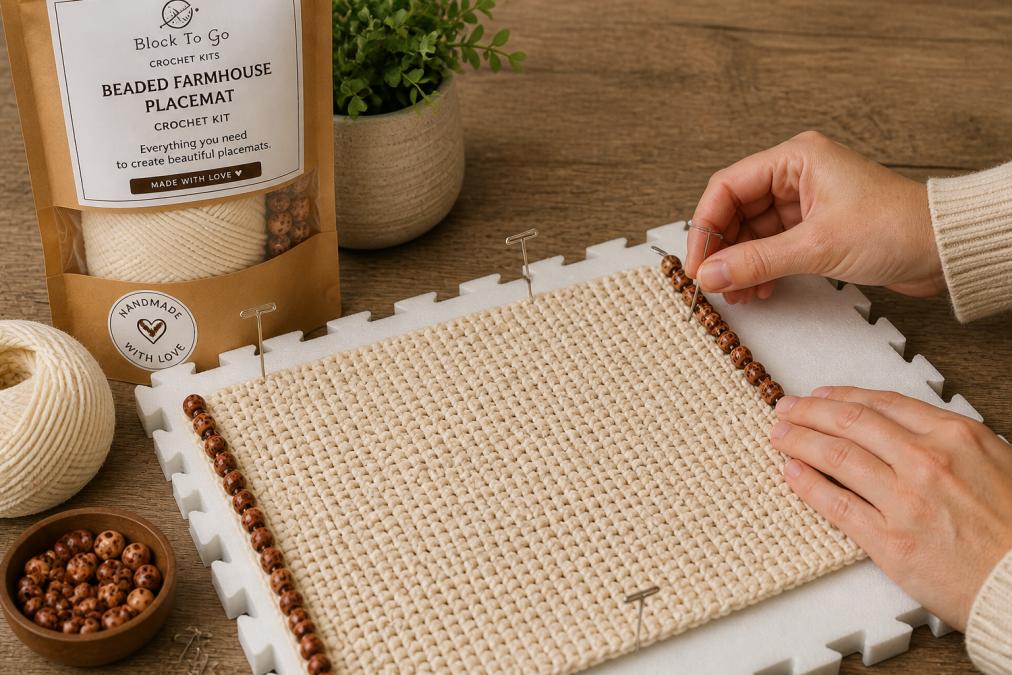
The difference is striking. Edges straighten, stitches even out, and your piece holds its shape exactly as intended. A blocked placemat lies flat on the table; an unblocked one might curl at the edges. For wearable projects like shawls or garments, blocking ensures the drape and fit are exactly what the designer intended.
Crochet Tension Tips for Beginners
Tension is how tightly or loosely you hold your yarn while crocheting. It's the single biggest factor in whether your finished piece matches the pattern's intended dimensions. Uneven tension creates visually inconsistent stitches that immediately read as amateur.
Most beginners hold their yarn too tightly. To find your ideal tension, crochet a gauge swatch using the yarn and hook specified in your pattern. Make it at least 4 inches square, then measure your stitches carefully. If your count is higher than the pattern calls for, your tension is too tight, try a larger hook. If your count is lower, your tension is too loose, try a smaller hook.
Consistent tension comes with practice. Hold your yarn with even pressure, keeping it at the same distance from your hook throughout your work. Take breaks to avoid hand fatigue, which often causes tension to tighten involuntarily.
Finishing Techniques for Crochet Gifts That Impress
The final touches transform a finished piece into a gift-worthy creation. Proper finishing includes weaving in ends, seaming pieces together securely, and sometimes adding embellishments like beads or edging.
Weaving in ends is tedious but essential. Use a yarn needle to thread your yarn tail through the stitches of your work for at least 2 inches, weaving horizontally along a row, then back vertically (crochet.com). Trim the excess yarn close to the work. Sloppy ends immediately signal that a project wasn't finished with care.
Shop Crochet Patterns & Kits →
For seaming pieces together, use a yarn needle and the same yarn as your project. The mattress stitch creates nearly invisible seams by threading your needle through the loops along the edges of two pieces.
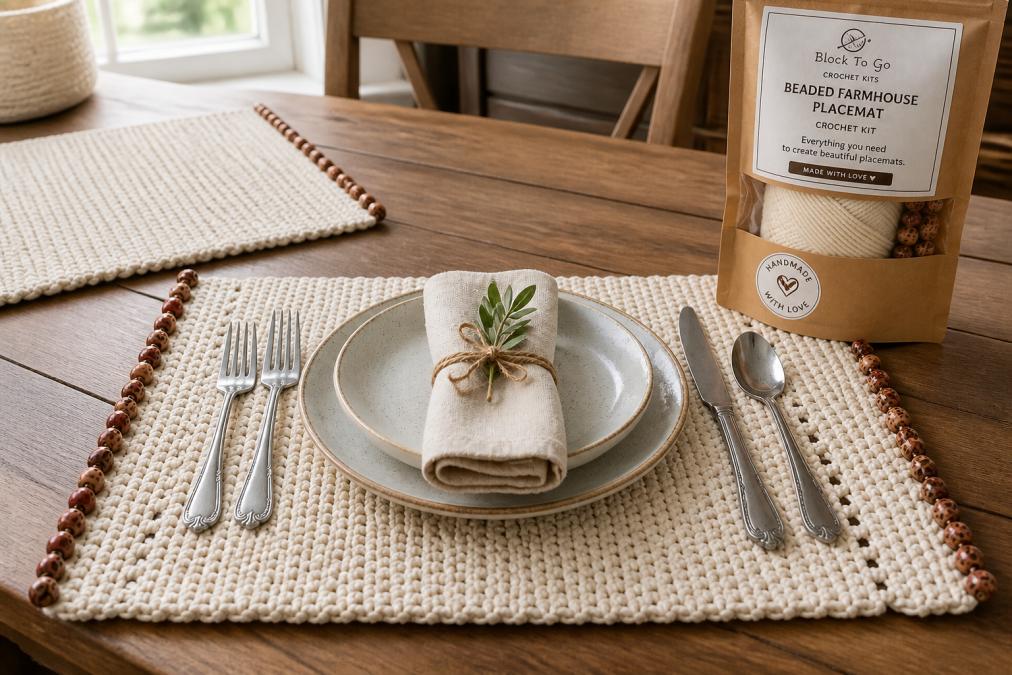
Beading and embellishments add visual interest when done intentionally. The Beaded Farmhouse Placemat Crochet Kit from BlockToGo demonstrates this beautifully, wooden beads sewn onto the finished edge create a polished, handcrafted look that elevates a simple placemat into something special. Space beads evenly for a professional appearance.

Consider your yarn choice as part of finishing too. Natural fibers like cotton and wool can create a more refined appearance than synthetic alternatives. High-quality yarn holds its shape better and shows stitch definition more clearly.
Making crochet that looks professional is absolutely within your reach. Blocking, tension control, and careful finishing are all learnable skills that improve with practice. Start with a beginner-friendly pattern from BlockToGo, focus on one technique at a time, and give yourself permission to improve gradually. Every crocheter you admire started exactly where you are now.
=== FAQ ANSWERS (audit these too, same rules) ===
[1] Q: How do I make my crochet projects look more professional? A: Professional-looking crochet comes from three key practices: maintaining consistent tension throughout your work, blocking your finished pieces to even out stitches, and using quality finishing techniques like weaving in ends neatly and seaming pieces carefully. Choosing the right yarn fiber and color also matters, natural fibers and monochromatic or tonal color choices tend to look more refined. Starting with well-written patterns that include clear stitch definitions helps too. Most beginners see dramatic improvement once they master blocking and tension control.
[2] Q: What are the best yarn types for a professional crochet finish? A: Natural fibers like cotton, wool blends, and bamboo create a more polished appearance than synthetic yarns. Cotton works beautifully for home décor and gifts because it holds stitch definition well and has a matte finish that reads as sophisticated. Wool and wool blends offer drape and depth. Avoid yarns with too much sheen or texture unless that's your intentional design choice. Higher-quality yarn also makes a noticeable difference, it crochets more smoothly and holds its shape better after blocking. Consider fiber content when choosing patterns; a farmhouse placemat looks best in sturdy cotton, while a lightweight accessory might shine in a cotton-bamboo blend.
[3] Q: Do blocking techniques make crochet look better? A: Yes, blocking transforms crochet. It evens out uneven stitches, squares up edges, and gives your work a finished, polished appearance. Blocking also helps pieces hold their intended shape and drape. For beginners worried about their tension looking uneven, blocking is a game-changer, it smooths out many imperfections. Even simple projects like cord wraps or small pouches benefit from a quick blocking. You don't need fancy equipment; a blocking board, pins, and steam or wet blocking work well. Most crocheters find that blocking takes 10-15 minutes per project and makes an enormous visual difference.
Frequently Asked Questions
Q: How do I make my crochet projects look more professional?
A: Professional-looking crochet comes from three key practices: maintaining consistent tension throughout your work, blocking your finished pieces to even out stitches, and using quality finishing techniques like weaving in ends neatly and seaming pieces carefully. Choosing the right yarn fiber and color also matters, natural fibers and monochromatic or tonal color choices tend to look more refined. Starting with well-written patterns that include clear stitch definitions helps too. Most beginners see dramatic improvement once they master blocking and tension control.
Q: What are the best yarn types for a professional crochet finish?
A: Natural fibers like cotton, wool blends, and bamboo create a more polished appearance than synthetic yarns. Cotton works beautifully for home décor and gifts because it holds stitch definition well and has a matte finish that reads as sophisticated. Wool and wool blends offer drape and depth. Avoid yarns with too much sheen or texture unless that's your intentional design choice. Higher-quality yarn also makes a noticeable difference, it crochets more smoothly and holds its shape better after blocking. Consider fiber content when choosing patterns; a farmhouse placemat looks best in sturdy cotton, while a lightweight accessory might shine in a cotton-bamboo blend.
Q: Do blocking techniques make crochet look better?
A: Yes, blocking transforms crochet. It evens out uneven stitches, squares up edges, and gives your work a finished, polished appearance. Blocking also helps pieces hold their intended shape and drape. For beginners worried about their tension looking uneven, blocking is a game-changer, it smooths out many imperfections. Even simple projects like cord wraps or small pouches benefit from a quick blocking. You don't need fancy equipment; a blocking board, pins, and steam or wet blocking work well. Most crocheters find that blocking takes 10-15 minutes per project and makes an enormous visual difference.