
Table of Contents
- Why Crochet Organizers Matter in Compact Living
- Vertical Storage Solutions for Yarn Stash Management
- DIY Yarn Storage Ideas You Can Make Today
- Crochet Hook Storage Solutions for Every Setup
- Under-Bed and Hidden Storage Hacks
- Project Bag Solutions for Portable Crafting
- Rental-Friendly Organization Without Wall Damage
- Conclusion
Last Updated: August 11, 2026
Why Crochet Organizers Matter in Compact Living
Small spaces demand creative solutions. Whether you're in a studio apartment, dorm room, or just working with limited square footage, yarn and crochet supplies have a way of taking over. The real challenge isn't finding storage, it's finding storage that doesn't sacrifice your living space or your sanity when you need to find a specific hook or yarn color at midnight.
This guide from BlockToGo covers practical, space-saving strategies for organizing your crochet supplies without requiring a dedicated craft room. Many crafters assume they need wall-to-wall shelving or a closet dedicated to their hobby. The truth is simpler: easy crochet organizers for small spaces work best when they fit your actual lifestyle, not some Pinterest-perfect ideal.
The stakes matter here. Poor organization leads to tangled yarn, lost hooks, and projects abandoned mid-way because you can't find your place. Good organization means you actually finish projects, travel with your craft, and maintain a clutter-free living area. That's not just aesthetics, it's the difference between crafting as a relaxing hobby and crafting as a source of frustration.
What makes this different from generic storage advice: we're focusing on solutions that work in rentals, tight budgets, and genuinely small footprints. No permanent wall damage required. No expensive systems. Just practical, proven approaches that actual crafters use.
Vertical Storage Solutions for Yarn Stash Management
When floor space is gone, walls become your best asset. Vertical storage transforms a chaotic yarn situation into something actually manageable. The key is choosing systems that match both your space and your stash size.
Pegboard Systems for Maximum Wall Space
Pegboards offer flexibility that fixed shelving can't match. You customize hook placement to fit your actual yarn sizes, and you can rearrange everything when your collection changes. A basic pegboard system costs under $100 in materials if you source it yourself, and installation takes an afternoon.
The real advantage: visibility. When your yarn is in front of you, you use it more consistently. You see color combinations you'd otherwise miss. You stop buying duplicates because you can actually see what you already own.
The practical setup: Mount a pegboard 48 inches wide and 36 inches tall on a wall with good natural light. Use hooks spaced 4-6 inches apart to accommodate different skein sizes. Add small shelves or baskets for notions, stitch markers, and pattern cards. The spacing matters, too close and larger skeins won't fit; too far and smaller yarn balls look lost.
One insider tip: Paint your pegboard a neutral color (white, gray, or soft cream) before mounting. It makes your yarn colors pop and looks intentional rather than utilitarian. If you're renting, look for adhesive pegboard systems that mount without drilling into studs.
Wine Rack Repurposing for Budget-Friendly Organization
Wine racks aren't just for wine. Each cubby holds one or two skeins perfectly, and they stack or mount easily. The beauty of this approach: they're cheap to find used (thrift stores, estate sales), and they look intentional in any room.
A standard wine rack holds 6-12 skeins depending on size. For apartment living, this is ideal, you're not storing your entire stash, just your current rotation. Oversized or oddly-shaped skeins won't fit, so this works best if you stick to standard yarn weights.
Mounting options vary. Wall-mounted racks work great for renters if you use adhesive strips rated for the weight. Tabletop racks take up floor space but offer flexibility, you can move them if your room layout changes. The cost is typically under $10 per rack if you find them secondhand.
The limitation: capacity. If you have a large stash, wine racks alone won't cut it. They're best paired with other storage methods for overflow or backup yarn.
DIY Yarn Storage Ideas You Can Make Today
The most satisfying storage solutions are often the ones you build yourself. DIY projects give you exactly what you need, cost less, and feel personal.
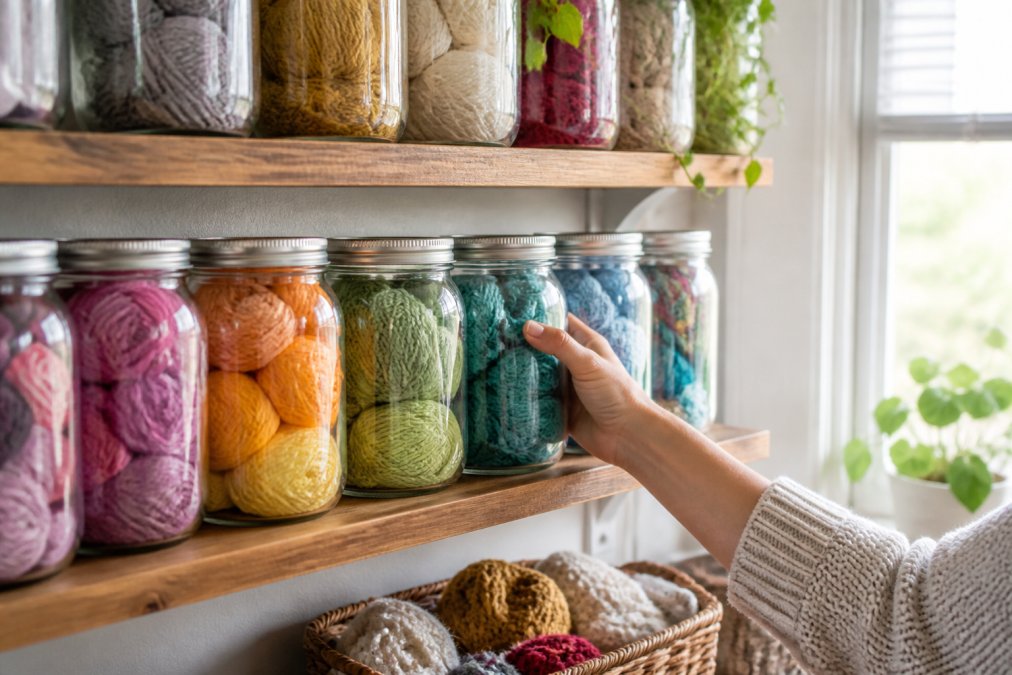
Mason Jar Yarn Holders
Clear mason jars solve multiple problems at once: they protect yarn from dust, let you see exactly what you have, and look intentional on a shelf or desk. The setup is straightforward.
Fill jars with yarn wound into balls or skeins. Label each jar with the yarn weight, fiber content, and yardage using adhesive labels. Stack them on a shelf, windowsill, or even a small bookcase. For active projects, keep one jar on your crafting table so your working yarn stays visible and within reach.
The advantages are real. Yarn stays clean. Colors are easy to mix and match visually. Jars are cheap (dollar stores carry them in bulk). The whole system takes minutes to set up.
One practical detail: wind yarn into balls before storing in jars. Skeins take up too much space and unwind unpredictably when you reach for them. A yarn winder makes this faster, but your hands work fine if you don't have one.
Fabric Bin Dividers from Scrap Materials
If you have fabric scraps, you can build simple dividers for storage bins or boxes. Cut fabric into strips and sew them into a grid pattern, then place the grid inside a bin. Each section holds one or two skeins neatly separated.
This approach works especially well for under-bed storage or closet bins where you need to maximize vertical space within the container. The dividers prevent yarn from tangling when you pull items in and out.
The time investment is minimal, an hour of sewing yields a divider that lasts years. If you don't sew, cardboard dividers work just as well. Cut strips of sturdy cardboard and arrange them in a grid pattern inside your bin.
Crochet Hook Storage Solutions for Every Setup
Hooks are small but easy to lose. A dedicated hook organizer keeps them protected, organized, and actually findable when you need them.
Hook Roll Organizers You Can Crochet
This is where BlockToGo's approach shines, you can crochet your own hook organizer. A simple hook roll uses basic stitches and takes a few hours from start to finish. You create pockets sized to fit your specific hooks, so nothing shifts or gets damaged.
The pattern is straightforward: crochet a rectangle, add vertical dividers using slip stitches or single crochet, then add a tie or button closure. Choose yarn in a color that matches your aesthetic. The finished roll folds up and fits in a project bag or on a shelf.
The benefit beyond practicality: you've made something functional that reflects your style. It's the opposite of generic plastic organizers.
If you're not ready to crochet your own, pre-made hook rolls are available, but making one yourself takes maybe 4-5 hours and costs just the yarn you already have on hand.
Compact Organizer Bags for On-the-Go Crafting
For crafters who travel or move projects between rooms, a dedicated organizer bag keeps everything together. Look for bags with interior compartments, elastic loops for hooks, and a clear top so you can see contents without opening it.
The ideal bag has pockets for notions (stitch markers, yarn needles, scissors), a main compartment for yarn, and dedicated slots for hooks. Handles and a shoulder strap make it portable. Size matters, too large and it becomes a dumping ground; too small and you can't fit an active project.
An organizer bag costs between $15-30 depending on quality. It's worth the investment if you crochet in multiple locations or travel frequently. The Teamoy organizer bag with inner dividers, for example, includes six holes to feed yarn through to prevent tangling during transport.
Under-Bed and Hidden Storage Hacks
Under-bed storage is invisible but accessible. It's perfect for yarn you're not actively using, backup skeins, seasonal colors, or projects you're not currently working on.
Use low, lidded containers that slide easily under a bed frame. Clear containers let you see contents without pulling everything out. Label each container by color family or yarn weight. The lid keeps dust and potential pests away from your fibers.
The limitation: access requires bending or kneeling. This storage works best for items you don't need frequently. If you're constantly digging for specific yarn, it defeats the purpose.
Closet shelves work similarly. Install floating shelves or use stackable bins on existing shelves. The principle is the same: keep backup yarn protected and organized, but not in your active workspace.
Project Bag Solutions for Portable Crafting
A dedicated project bag transforms crochet from a stationary activity into something you can do anywhere. This matters more than you might think. Crafters who can take projects on the go finish more projects overall.
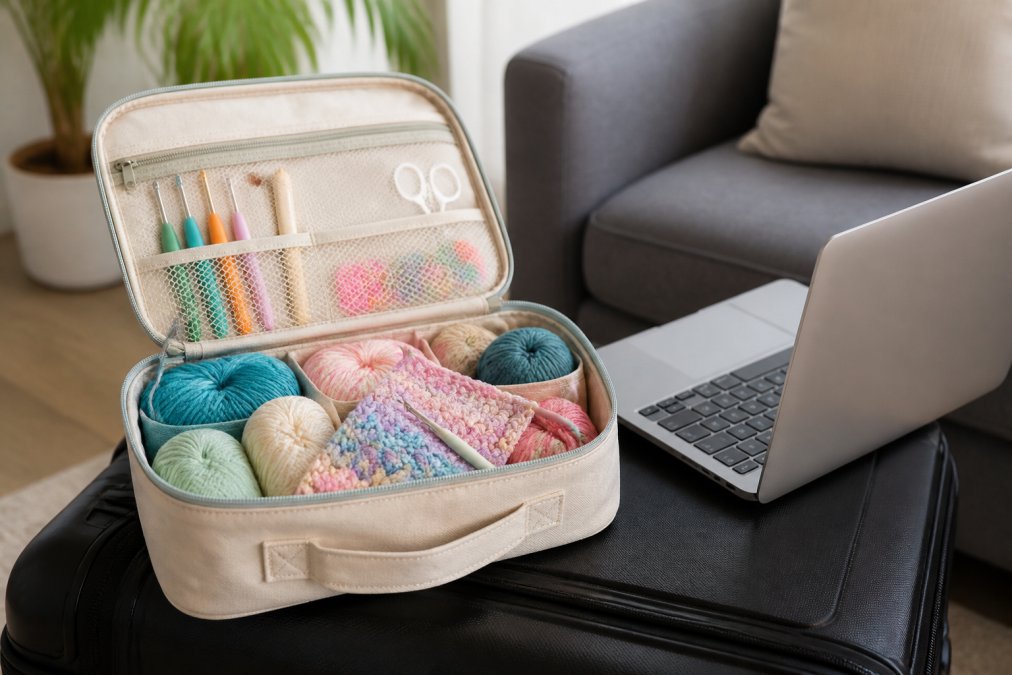
The ideal project bag has compartments for yarn, hooks, notions, and your current work-in-progress. It should close securely so nothing spills during transport. Weight matters, you're carrying this, so it shouldn't be heavy when full.
Look for bags with multiple pockets (hooks need their own space), elastic loops to keep things from shifting, and a main compartment large enough for active projects. Handles and a shoulder strap give you carrying options.
The real advantage: a project bag makes your craft portable. You can work during lunch breaks, on public transit, while traveling, or anywhere you have 15 minutes. This consistency builds the habit. People who finish crochet projects are people who can work on them regularly, even in small chunks.
A good project bag costs $20-40. It's an investment in actually finishing projects, which is worth more than the price.
Rental-Friendly Organization Without Wall Damage
If you're renting, permanent wall mounting isn't an option. The good news: most of the best organizing systems work without drilling, nailing, or leaving marks.
Adhesive strips rated for moderate weight (2-5 pounds) can hold pegboards, shelves, and organizers. Command strips and similar products are designed for renters, they remove cleanly without damaging paint. Always check your lease first, but most landlords allow adhesive strips.
Over-the-door organizers require zero wall damage. They hang from any door using metal hooks. The Simply Tidy over-the-door organizer, for example, holds multiple bins for yarn and supplies without permanent installation.
Freestanding solutions work too: shelving units, storage carts, and bookcases don't require installation. They're flexible, you can move them when you change rooms or move apartments.
The key principle: if you can remove it without leaving marks or holes, it works for renters. That covers most modern organizing systems.
Conclusion
Easy crochet organizers for small spaces don't require expensive systems or permanent installations. They require intention: choosing storage that matches your actual space, your stash size, and your crafting habits.
The best approach combines multiple strategies. Use vertical wall space for active yarn. Keep a project bag for portable crafting. Store backup supplies under the bed or in closet bins. Add a dedicated hook organizer so you spend less time searching and more time creating.
Start with one solution, maybe a pegboard or a project bag, and expand from there. You'll quickly see what works for your space and adjust as needed. The goal isn't perfection. It's having your supplies organized enough that you actually use them, finish projects, and enjoy the process.
BlockToGo offers beginner-friendly crochet patterns and kits that pair perfectly with any organizing system. When your supplies are organized and your patterns are clear, the whole crafting experience becomes less stressful and more enjoyable. Start with a simple project, build your organizing system around it, and watch how much more you actually create.
Frequently Asked Questions
How do I organize yarn in a small apartment?
Start with vertical storage like pegboards or wall-mounted organizers to maximize limited floor space. Use clear containers or bins so you can see your yarn stash without opening each one. Under-bed storage works well for yarn you don't access frequently. For active projects, keep a compact project bag nearby. Collapsible crates and over-the-door organizers are rental-friendly options that don't require permanent installation. The key is using every inch of wall and vertical space available.
What are the best crochet hook storage solutions for small spaces?
Crochet hook storage solutions for small spaces include hook rolls (which you can even crochet yourself), compact organizer bags with designated slots, and small drawer dividers. A collapsible storage crate works well for keeping hooks with their matching projects. If you have limited shelf space, hanging organizers or pegboard hooks keep hooks visible and accessible without taking up floor room. Choose a solution that fits your crafting style, whether you prefer everything in one portable bag or organized by hook size on a wall display.
Can I store my crochet supplies in a dorm room or studio apartment?
Yes, small-space storage is absolutely possible in a dorm or studio. Use under-bed storage containers for your yarn stash, over-the-door organizers for notions and smaller supplies, and a compact project bag for current work. Wall space is your best friend: pegboards, small shelves, or even a wine rack take up minimal floor space. Collapsible crates can be tucked into closets or corners. The goal is vertical storage and multipurpose items that serve double duty, like a wooden yarn bowl that's both functional and decorative.
How can I keep my crochet supplies organized on a budget?
Budget-friendly organization starts with repurposing items you already have: mason jars for yarn, old shoe boxes as dividers, and thrifted wine racks for display. DIY crochet hook rolls made from scrap fabric cost almost nothing. Over-the-door organizers are inexpensive and don't require installation. Collapsible crates and storage bins are affordable at most retailers. The most cost-effective approach combines one or two purchased organizers with creative DIY solutions using materials you have at home. Focus on solutions that work for your space first, then invest in specialty items only if needed.
Small-space crafting works best when organization matches reality, not Pinterest. Set up your system, keep it simple, and focus on finishing projects instead of managing clutter.