
Table of Contents
- Why Small Projects Help You Finish Crochet Work Faster
- How to Weave in Ends Quickly Without Sacrificing Quality
- Crochet Time Management Tips to Stay on Track
- Finishing Techniques That Prevent Unraveling
Last Updated: August 19, 2026
More than 75% of crochet projects started are actually finished, according to The Washington Post's analysis of over a million crochet projects on Ravelry. But here's what most crocheters don't realize: finishing speed has almost nothing to do with how fast your hands move. It's about choosing the right projects and mastering a few finishing techniques that prevent frustration.
At BlockToGo, we've watched thousands of crocheters struggle with the same problem: they pick ambitious projects, get halfway through, and abandon them because the end feels impossibly far away. The solution isn't motivation, it's strategy. When you finish crochet projects quickly, you build momentum, confidence, and a stash of beautiful handmade items you actually use.
This guide walks you through the exact approaches that work, from project selection to the final stitch.
Why Small Projects Help You Finish Crochet Work Faster
The data is clear: smaller projects have dramatically higher completion rates. Over 90% of dishcloths and washcloths logged on Ravelry are marked complete, compared to fewer than 50% of crochet coats and jackets. This isn't because dishcloths are easier, it's because they deliver satisfaction in a timeframe that keeps you engaged.
When you finish a project in a few hours or days, your brain releases the motivation you need to stay hooked. You see the final result. You use it. You want to make another one.
The best projects for quick completion share three traits: they're functional, portable, and don't require constant decision-making. A simple dishcloth, coaster set, or small blanket checks all three boxes. You know exactly what the finished item should look like, with no complex shaping or color changes demanding focus.
According to the Craft Industry Alliance's 2025 Consumer Yarn Survey, crafters complete an average of just over 16 projects per year, with an 84% overall completion rate. Experienced crocheters have learned to pick projects they'll actually finish.
If you're traveling, working full-time, or juggling multiple commitments, small projects are essential. They fit in a carry-on, work in 15-minute sessions, and you can pick them up without losing your place. BlockToGo's portable patterns are designed exactly for this: projects you can complete in a weekend or two, even with a busy schedule.

How to Weave in Ends Quickly Without Sacrificing Quality
Weaving in ends is where most crocheters lose time and patience. The instinct is to rush through it, but loose ends unravel. The real speed comes from doing it right the first time.
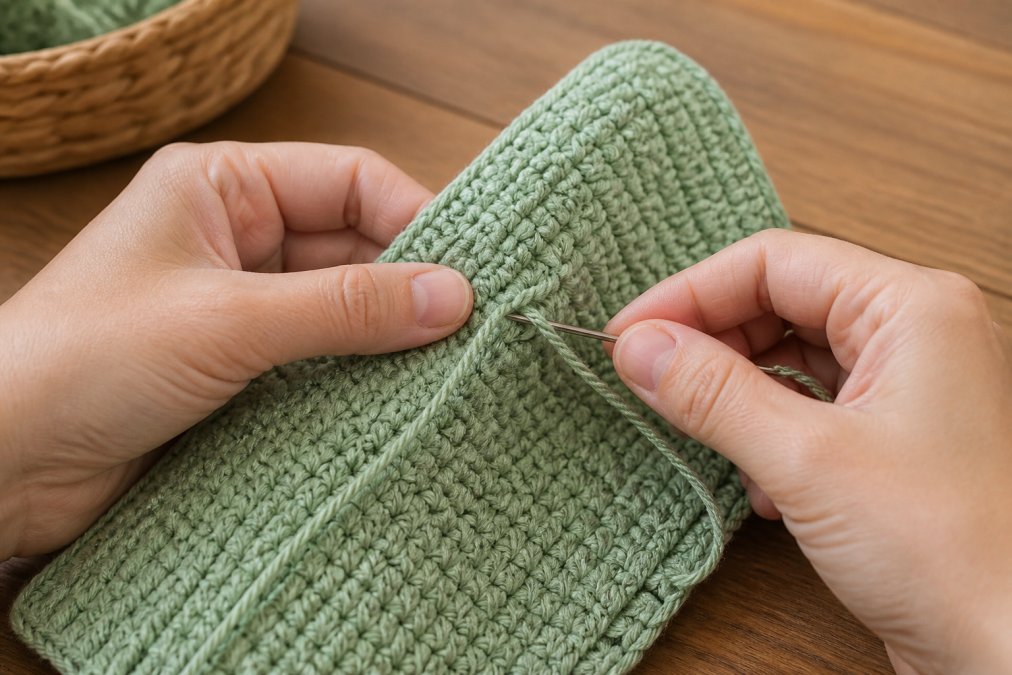
Start with the right tool. A tapestry needle with a blunt tip and an eye large enough for your yarn weight matters. If you're working with a yarn weight you don't have a needle for, split your yarn in half lengthwise, it threads easier and weaves in faster.
Thread about 6 inches of the yarn tail. Weave horizontally through the back loops of stitches for at least 6-8 stitches, then reverse direction and weave back through different loops. This overlapping path prevents unraveling.
Pull gently as you weave, not hard enough to pucker the fabric, but enough to snug the yarn into the stitches. Test by tugging the tail; if it moves, you need more stitches or tighter tension.
For yarn tails at the edge, weave into the body of the fabric, not along the edge. Interior stitches hold better and the finished edge looks cleaner.
Most crocheters spend 2-3 minutes per tail. With practice, you'll cut that to 60-90 seconds.
Crochet Time Management Tips to Stay on Track
Finishing quickly isn't just about technique. It's about how you structure your crochet time so you make consistent progress.
Set a specific project goal each week. Instead of "I'll work on this blanket," commit to "I'll complete 10 rows this week." Specific targets keep you moving forward.
Shop Crochet Patterns & Kits →
Work in focused sessions. A focused 30-minute session where you're fully present beats three distracted hours where you're rewinding stitches and fixing mistakes.
Eliminate decision fatigue. Choose your yarn and hook before you sit down. Know your stitch pattern cold so you don't spend half your session looking up abbreviations. The more automatic your hands can work, the faster you progress.
Track your progress visually. Take a photo of your project each time you sit down. Seeing the before-and-after shift keeps motivation high.
If a project feels endless, break it into smaller milestones. Instead of "finish this blanket," aim for "complete the first color section." Each milestone is a small win that propels you forward.
Finishing Techniques That Prevent Unraveling
A project falls apart when the final stitches aren't secured properly. The last loop needs to be locked, and the yarn tail needs to be hidden where it can't slip free.
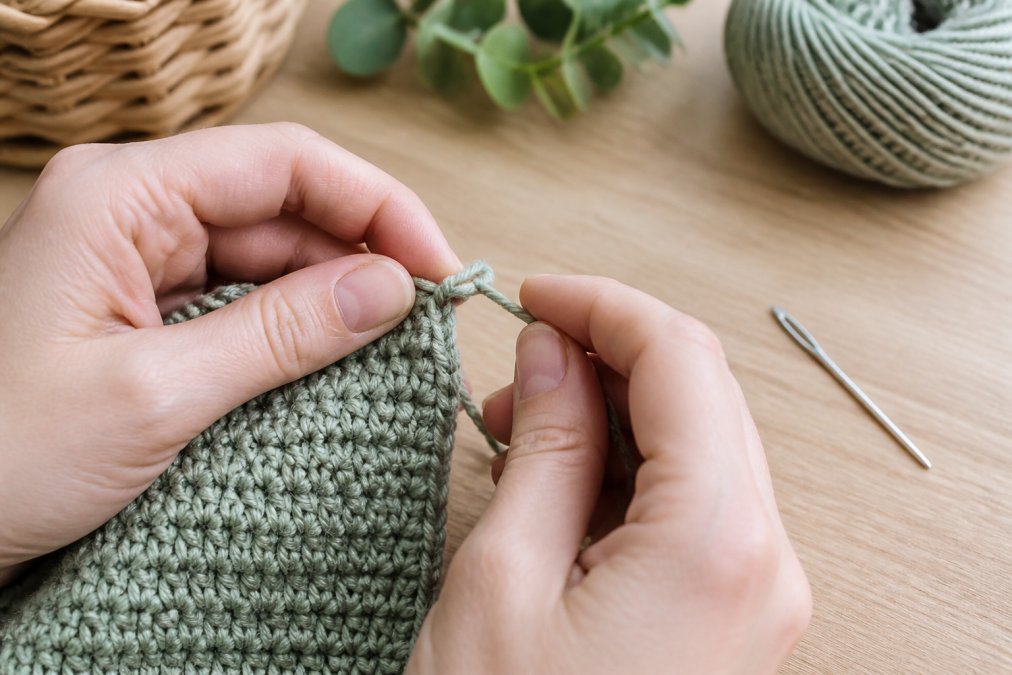
The standard fastening off works like this: cut your yarn, leaving a 6-inch tail. Pull the tail all the way through the final loop and tighten gently. The loop locks and won't unravel.
But here's what prevents the yarn tail from slipping out later: weave it in immediately, before you move to the next step. Don't leave loose tails hanging while you finish other parts of your project.
For projects made with slippery yarn, add an extra security measure. After weaving in the tail, weave the same tail through a different set of stitches in the opposite direction. This double-weaving creates friction that prevents slipping.
Test your finished edges before considering the project done. Hold the project and gently tug on the edges and seams. If anything moves, weave in the tail more thoroughly.
The time you spend securing your project now saves you from heartbreak later when a seam unravels.
The gap between starting a crochet project and finishing one isn't always about skill, it's about choosing projects that fit your life and mastering the few techniques that matter most. Small, functional projects with secure finishing keep you motivated and building. When you're ready to explore beginner-friendly patterns designed for quick completion, visit the BlockToGo shop to browse portable projects and kits that you can actually finish, even with a packed schedule. Each pattern includes clear instructions and all the guidance you need to create something beautiful in just a few hours.
Frequently Asked Questions
What's the fastest way to finish crochet projects without cutting corners?
Choose smaller projects like dishcloths, washcloths, and coasters, these have a 90% completion rate because they deliver quick wins. Use a tapestry needle to weave in ends as you go, rather than saving it for the end. Fasten off securely by pulling your yarn tail through the final loop and weaving it back through at least 4-5 stitches. This combination keeps you moving forward without sacrificing that professional finish.
How do I know if a crochet pattern will actually be quick to finish?
Look for patterns with minimal color changes, simple stitch counts, and straightforward construction. Dishcloths and small gift items finish fastest because they require less yarn management and fewer finishing steps. BlockToGo offers beginner-friendly patterns specifically designed for quick completion, like the Tic-Tac-Toe To-Go pattern, which combines portability with a real sense of accomplishment.
Can I really weave in ends quickly without my project looking messy?
Yes, the key is using the right tool and technique. A tapestry needle with a blunt tip slides through stitches without splitting yarn. Weave your tail in one direction for 4-5 stitches, then reverse direction for another 4-5 stitches to lock it in place. This invisible join technique takes less than a minute per tail and creates a polished, professional look every time.
What's the best crochet time management approach for busy people?
Set a realistic daily goal, even 15-20 minutes of focused crochet time adds up. Choose portable projects you can work on while traveling or during breaks. Track your progress by counting completed rows or rounds rather than total time, which keeps motivation high. Batch your finishing work (fastening off and weaving in ends) into dedicated sessions rather than spreading it throughout the project.