
Table of Contents
- Common Crochet Mistakes That Happen While Traveling
- How to Fix Dropped Stitches in Public
- Portable Crochet Tool Kit Essentials for Troubleshooting
- Portable Crochet Lamp Versus Headlamp for Crafting
Last Updated: August 28, 2026
Crocheting while traveling sounds like the perfect way to relax during long flights or train rides. But then reality hits: you drop a stitch, notice wonky edges, or realize you've been working with inconsistent tension. The good news? Learning how to troubleshoot crochet mistakes while traveling doesn't require advanced skills, just the right knowledge and a few essential tools.
This guide covers the most common mistakes that happen when you're crocheting on the go, and how to fix them without abandoning your project. Whether you're working on a simple pattern like our Tic-Tac-Toe To-Go game or something more complex, these strategies will help you stay confident while crafting away from home.

Common Crochet Mistakes That Happen While Traveling
Travel introduces unique challenges to your crochet routine. Inconsistent lighting, cramped seating, distractions, and unfamiliar environments all contribute to mistakes you might not make at home. The most frequent culprits are dropped stitches, uneven tension, twisted foundation chains, and counting errors (ravelry.com). Most travel mistakes are preventable with awareness and correctable with patience.
How to Fix Dropped Stitches in Public
A dropped stitch is when a loop falls off your crochet hook entirely. For a stitch dropped in the current row, simply pick it back up with your hook and pull the working yarn through it. If it's from a previous row, use a crochet hook one or two sizes smaller to carefully pick up the loop and work it back up through each row until it reaches your current working level.
The best prevention strategy? Use stitch markers at regular intervals. Place markers every 10 stitches or at the beginning and end of pattern repeats. When traveling, stitch markers are lightweight, portable, and invaluable for keeping your stitch count accurate without constant mental effort.
Portable Crochet Tool Kit Essentials for Troubleshooting
The right tools make troubleshooting infinitely easier. Your essential kit should include stitch markers (both removable and locking varieties), sharp scissors, a yarn needle for weaving in ends, and at least two crochet hooks in the sizes your pattern requires. Add a small zippered pouch to keep everything organized and prevent loss. A portable row counter helps you track where you are in your pattern without relying on memory.
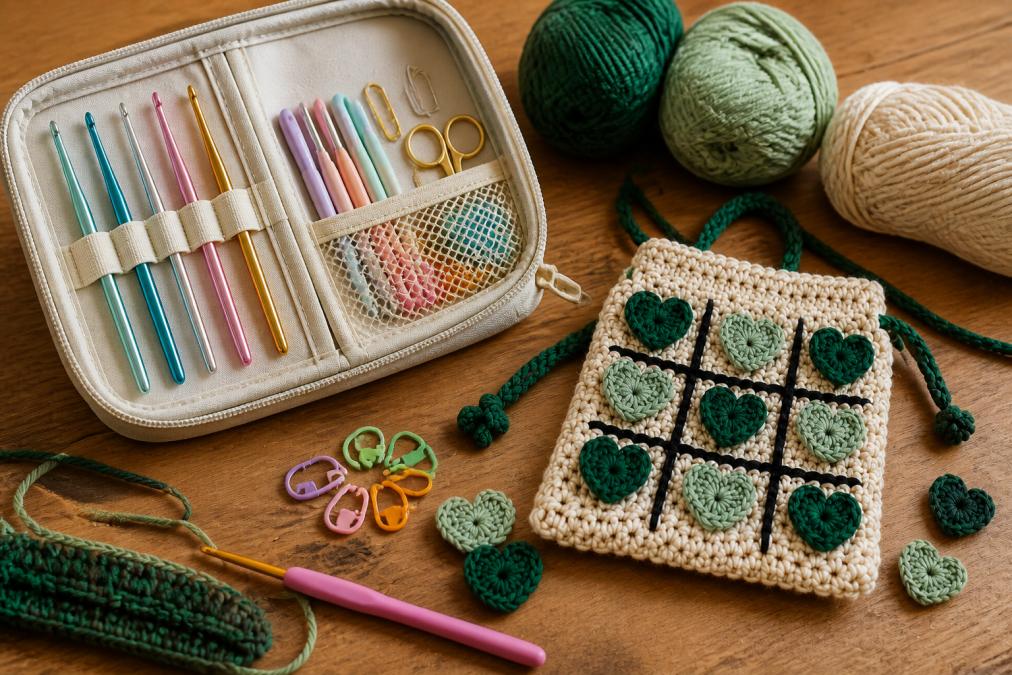
For lightweight yarn storage, wind your yarn into small cakes or balls and use a hair barrette to secure the working end. If you're working on a project from BlockToGo, like our Cord Cutie Wraps, having the included instructions downloaded or printed is invaluable when you're away from home.
Shop Crochet Patterns & Kits →

Portable Crochet Lamp Versus Headlamp for Crafting
Lighting is the hidden factor that determines whether you'll catch mistakes before they compound. A portable crochet lamp sits on a table or your lap and illuminates your work from above, ideal for desks or train tables. A headlamp attaches to your head and moves with you, perfect for cramped airplane seats or anywhere you lack a dedicated work surface (thesprucecrafts.com). Headlamps are lighter and more compact, though some crocheters find them uncomfortable for extended periods (ravelry.com).
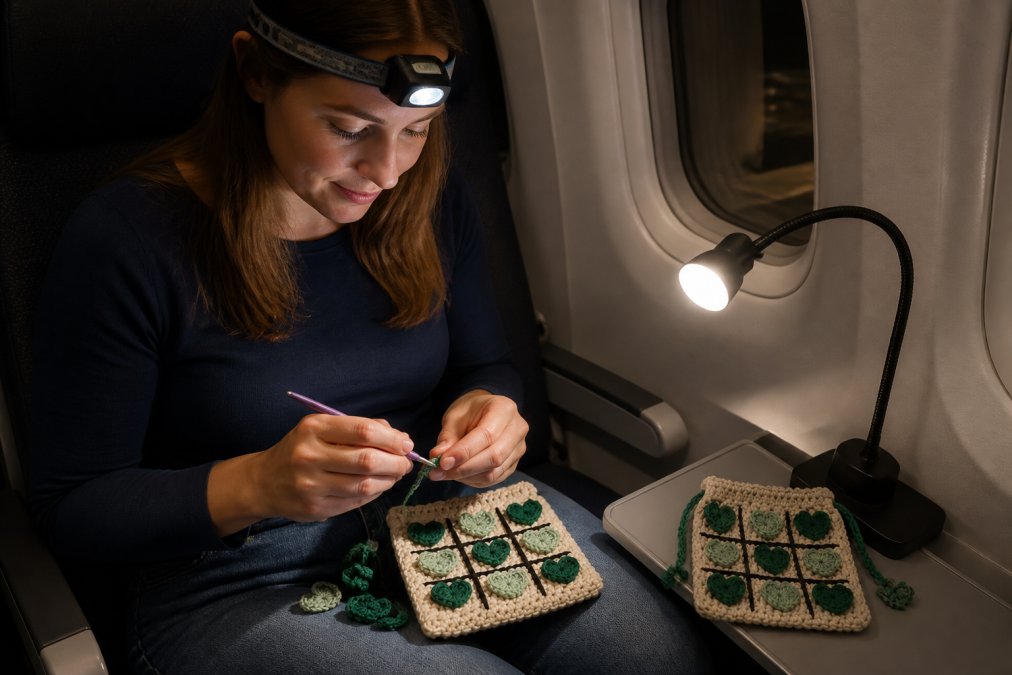
For most travelers, a headlamp is the practical choice, it's portable, hands-free, and adjustable. Look for models with adjustable brightness and a warm light setting that won't strain your eyes during long crafting sessions.
Traveling doesn't mean putting your crochet projects on hold. With the right troubleshooting strategies and portable tools, you can crochet confidently whether you're on a flight, train, or vacation. BlockToGo's beginner-friendly patterns and kits are designed with travel in mind, featuring clear instructions and practical projects you can actually finish. Visit the BlockToGo shop to explore portable crochet patterns and kits that travel as well as you do.
| Common Travel Mistake | Quick Fix | Prevention Strategy |
|---|---|---|
| Dropped stitch (current row) | Pick up loop with hook, pull working yarn through | Use stitch markers every 10 stitches |
| Dropped stitch (previous row) | Use smaller hook to pick up and work through rows | Mark pattern repeats clearly |
| Uneven edges | Adjust tension consistency, recount stitches | Check tension at row start and end |
| Twisted foundation | Unravel to foundation, recount chain stitches | Count chain twice before starting |
| Missed stitch | Frog back to error, recount row | Work slowly in poor lighting |
Frequently Asked Questions
How do I fix a dropped stitch when I'm traveling and don't have all my supplies?
A dropped stitch is when a loop slips off your hook. If you notice it immediately, pick it back up with your crochet hook and secure it. If it's several rows back, you can use a life line (a strand of yarn threaded through stitches) to prevent unraveling further, then carefully unravel back to that point. For quick fixes while traveling, stitch markers placed at regular intervals help you catch dropped stitches before they become major problems. Keep a small hook and stitch markers in your portable crochet tool kit for emergencies.
What should I pack in a portable crochet tool kit for troubleshooting mistakes?
Your portable crochet tool kit essentials should include stitch markers, a small crochet hook (in case you lose yours), blunt-tip scissors, a yarn needle for weaving in ends, and a small notepad to track your row count. A life line (thin yarn or thread) is invaluable for preventing major frogging. Store these items in a zippered pouch to keep everything organized. These tools take minimal space and can prevent frustration when mistakes happen far from home. Visit the BlockToGo shop to explore patterns designed with travel-friendly materials and clear instructions.
Is a portable crochet lamp or headlamp better for traveling?
A headlamp is more portable and leaves both hands free for crocheting, making it ideal for tight spaces like airplane seats or train compartments. A portable crochet lamp provides broader lighting but requires a flat surface and takes up more luggage space. For traveling, a headlamp typically wins due to its compact size and hands-free design. However, some crocheters prefer a small clip-on lamp that attaches to their project bag. Test both options before your trip to see which fits your travel style and comfort level.